Skip to content

Exercise technique guide

How to Do a Shoulder Press

The shoulder press has you push a weight from shoulder height to overhead. It builds strong shoulders and triceps and trains the strength you use to lift things onto high shelves. It can be done seated or standing, with dumbbells or a barbell.
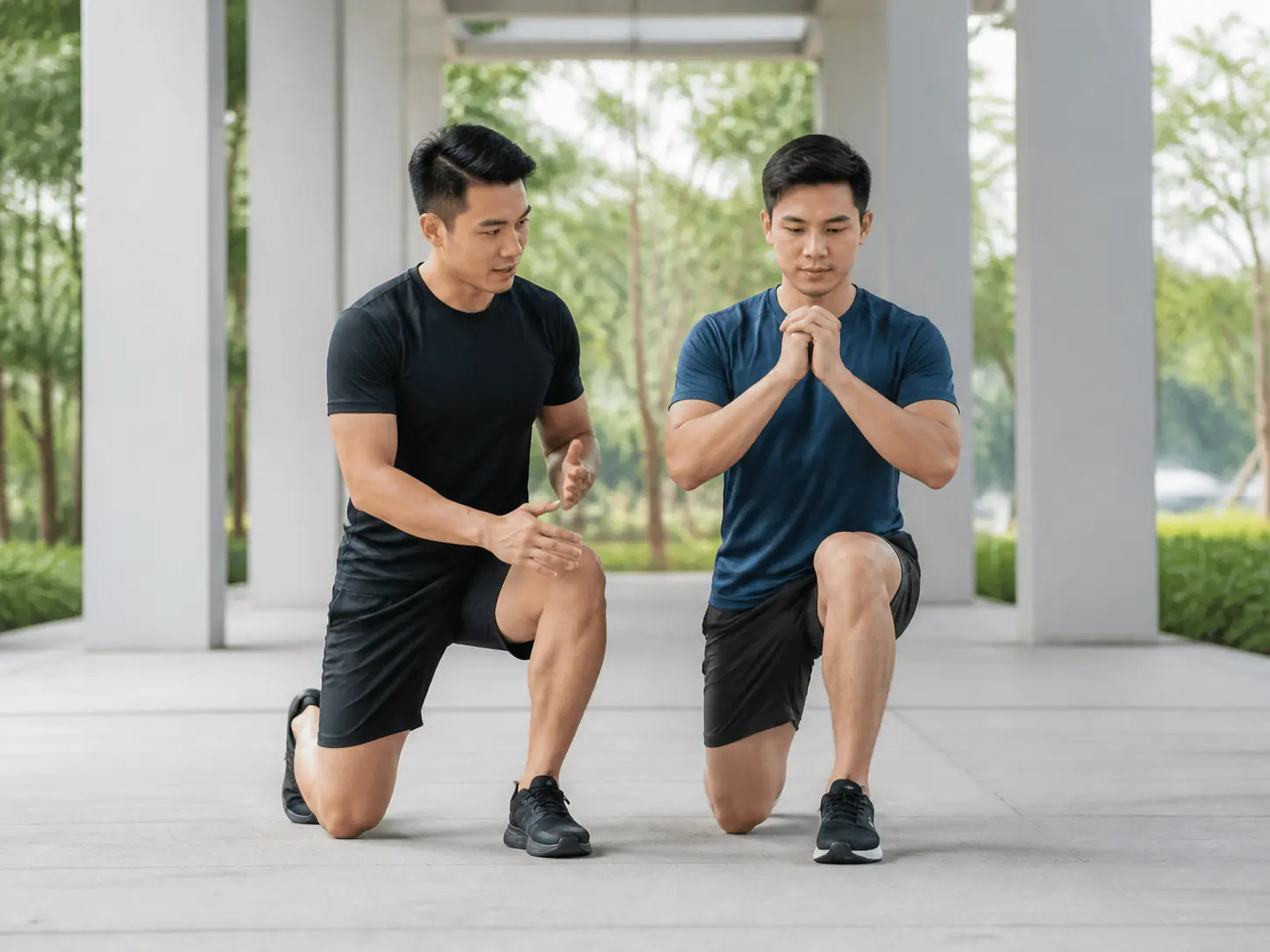
A trainer demonstrating controlled split-squat technique

Being able to press a weight overhead keeps your shoulders strong and useful for life, from stowing luggage in an overhead bin to lifting a box onto a top shelf. The shoulder press is the direct way to train that strength.

Dumbbells or a barbell both work, so it fits a condo gym or our Putra Heights centre. We often start seated for control, then progress to standing, which adds a strong core demand once your shoulders are ready.

What it trains and who it suits

It works the shoulders and triceps, with the upper back and core stabilising the load. It suits anyone wanting stronger, more capable shoulders, and standing versions add whole-body bracing.

Because overhead strength fades with age, it is especially valuable for older adults, provided the shoulders are healthy and pain-free.

Step-by-step cues

  1. Hold the weight at shoulder height, elbows under the wrists
  2. Brace your core and squeeze your glutes if standing
  3. Press the weight straight up, moving your head slightly back
  4. Finish with arms straight and the weight over your shoulders
  5. Lower with control back to shoulder height

Common mistakes and quick fixes

  • Leaning back to press, brace the core and keep ribs down
  • Pressing the weight forward, drive it straight up over the ears
  • Shrugging into the ears early, let shoulders rise only at the top
  • Flaring elbows too wide, keep them slightly in front of the bar

Regressions, progressions and when to stop

Too hard? Press seated with back support and lighter weight. Too easy? Add load, press standing, or slow the lowering. At home dumbbells work well seated or standing; at our centre we progress toward barbell overhead pressing.

  • Stop if you feel sharp shoulder pain rather than muscle effort
  • See a professional if you cannot raise your arm fully without pain

Frequently Asked Questions

Seated or standing shoulder press?+

Seated is more stable and easier to control, good for beginners. Standing adds a core and full-body demand. We often start seated and progress to standing as you get stronger.

Why does my lower back arch when pressing?+

Usually the weight is too heavy or your core is not braced. Lower the load, squeeze your glutes and stomach, and press straight up rather than leaning back.

Is overhead pressing safe for the shoulders?+

For healthy shoulders, yes, and it keeps them strong. If you have shoulder pain or cannot raise your arm freely, get it assessed before pressing overhead.

Dumbbells or barbell for shoulder press?+

Dumbbells allow a more natural path and even out arm strength. The barbell lets you load heavier. Beginners usually start with dumbbells for comfort and control.

Continue exploring

Programmes

Lower-Body Strength

Lower-body strength training builds your legs, hips and glutes, the biggest muscles you own and the engine behind walking, stairs, sport and standing up. Strong legs make daily life easier, protect your knees and back, and burn plenty of energy in the process.

See what it includes →
Weight Loss

Strength Plus Cardio for Fat Loss

The best fat-loss plans use both strength and cardio, not one or the other. Strength keeps muscle and shape; cardio and walking add extra calorie burn and heart health. We show you how to combine them without overtraining, so fat drops while your body stays strong.

See the coaching approach →
Programmes

Functional Fitness

Functional fitness trains your body for the things you actually do, carrying shopping up to the condo, picking a child off the floor, twisting to reach the back seat. We build strength, stability and mobility in real movement patterns, not isolated machine work, so daily life gets easier.

See what it includes →
Weight Loss

Weight Loss After 50

Weight loss after 50 is really about protecting muscle and bone while losing fat. We use gentle, controlled strength training, enough protein and daily walking to reshape your body without crash diets, improving how you move, your balance and your health, not just the number on the scale.

See the coaching approach →
Why KinesioFitness

Assessment-Led Coaching

Assessment-led coaching means we test before we prescribe. Before your first real workout we screen how you move, what you can lift, your history and your schedule, then build a plan on facts, not a template. It is the single biggest reason our clients progress safely.

Compare this option →
Goals

Do Your First Push-Up

Doing your first proper push-up means building enough chest, shoulder, arm and core strength to lower and press your whole body from the floor with good form. We coach the progression 1-to-1, from incline and knee versions up to your first full rep.

See the coaching approach →

Want help applying this guide to your own training?

Private coaching adapts exercise choice, loading and progression to your level, equipment and goal.

Ask a question first Request an assessment time