Skip to content

Exercise technique guide

How to Do a Thoracic Rotation

Thoracic rotation improves how well your upper back twists, an area that stiffens from sitting and hunching over screens. Better upper-back mobility supports good posture, healthier shoulders and comfortable rotation for sport and daily life. A quick, gentle daily drill.
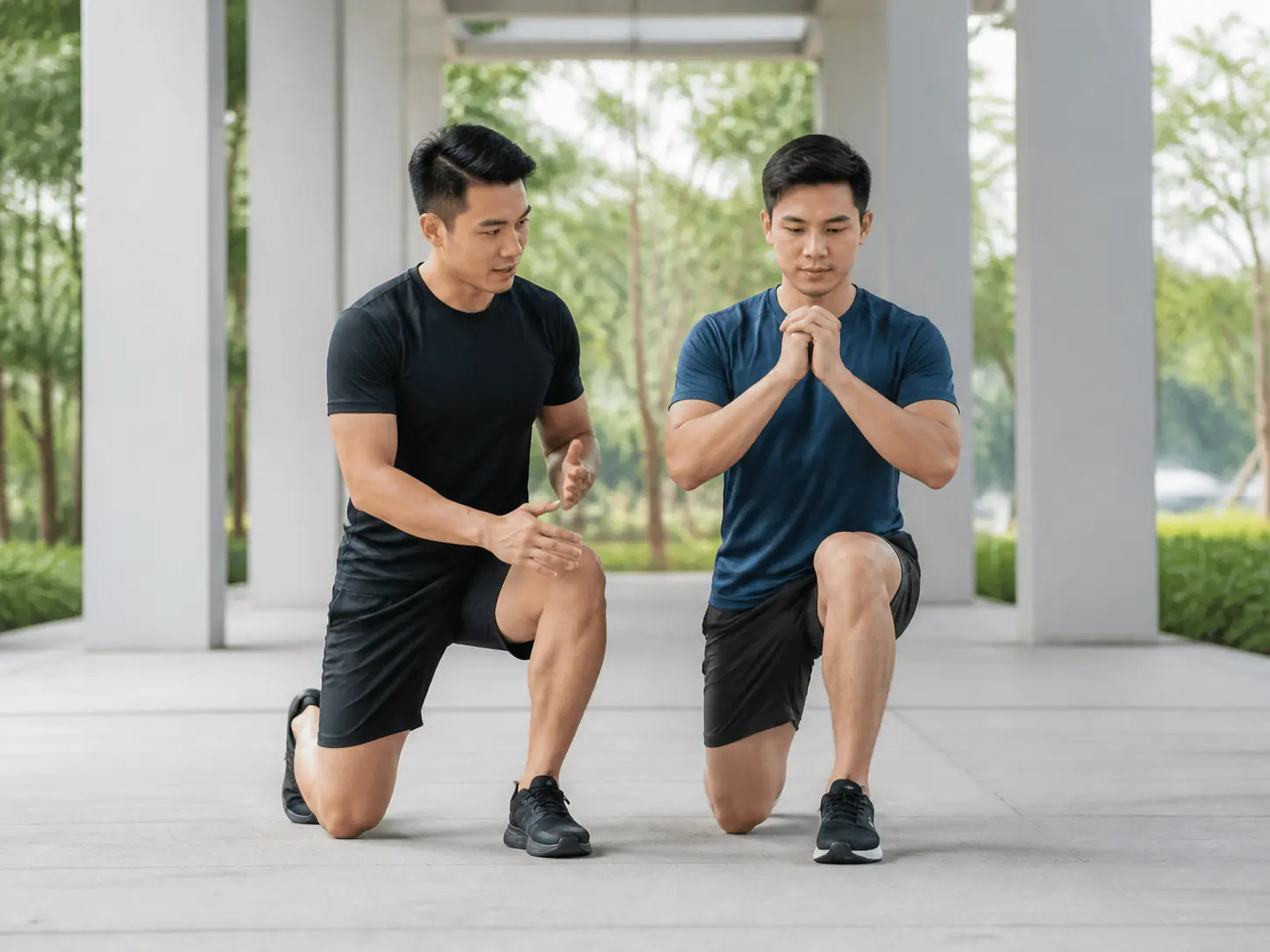
A trainer demonstrating controlled split-squat technique

Your upper back, or thoracic spine, is built to rotate, but hours hunched over a screen stiffen it up. That stiffness can push extra work onto your neck, shoulders and lower back. Thoracic rotation drills restore that natural twist.

You need only floor space, so these fit any home or our Putra Heights centre. A few gentle rotations before training or during the day keep your upper back mobile, which supports better posture and healthier shoulders.

What it trains and who it suits

It improves rotational mobility in the upper back, easing stiffness from sitting. It suits desk workers, people with rounded posture, and anyone in rotational sports like golf or racquet games.

Because it is gentle and equipment-free, it is easy to fit in daily and helps almost everyone move and stand better.

Step-by-step cues

  1. Kneel and sit back, or lie on your side with knees bent
  2. Place one hand behind your head or reach one arm out
  3. Rotate your upper back to open your chest toward the ceiling
  4. Follow the movement with your eyes and breathe out
  5. Return slowly and repeat, then switch sides

Common mistakes and quick fixes

  • Twisting from the lower back, keep the hips still, rotate the upper back
  • Forcing the range, move only as far as feels comfortable
  • Holding the breath, exhale as you rotate open
  • Rushing, move slowly for a better stretch

Regressions, progressions and when to stop

Too stiff? Use a smaller range and support your head. Progressing? Reach further, add a gentle hold, or rotate more. At home the floor is all you need; at our centre we combine it with shoulder and posture work.

  • Stop if you feel sharp back or neck pain rather than a gentle stretch
  • See a professional if rotating triggers sharp or radiating pain

Frequently Asked Questions

Why is upper-back mobility important?+

Your upper back is meant to rotate, and stiffness there forces your neck, shoulders and lower back to compensate. Restoring the twist supports better posture and healthier movement.

Does this help with posture?+

Yes. A mobile, well-moving upper back makes it easier to stand tall and pull your shoulders back, especially combined with strengthening work and less sitting.

How often should I do thoracic rotations?+

Daily or before training is ideal, especially if you sit a lot. A few minutes regularly keeps your upper back moving well and reduces stiffness.

Where should I feel it?+

A gentle stretch and opening feeling across the upper back and ribs, not in the lower back or neck. If you feel it there, keep the hips still and rotate the upper back only.

Continue exploring

Programmes

Upper-Body Strength

Upper-body strength training develops your chest, back, shoulders and arms through balanced pushing and pulling. Done right, it improves your posture, makes daily lifting and carrying easier, and builds the shape Many people associate with looking fit and capable.

See what it includes →
Programmes

Functional Fitness

Functional fitness trains your body for the things you actually do, carrying shopping up to the condo, picking a child off the floor, twisting to reach the back seat. We build strength, stability and mobility in real movement patterns, not isolated machine work, so daily life gets easier.

See what it includes →
Goals

Fix Your Posture

Fixing posture is less about standing straighter on command and more about building the strength and mobility to hold a good position without effort. We coach that 1-to-1, opening tight areas from desk life and strengthening the muscles that keep you upright all day.

See the coaching approach →
Goals

Flexibility for Desk Workers

Flexibility for desk workers targets the specific tightness that eight hours in a chair creates, locked-up hips, short hamstrings, a stiff neck and tight chest. We coach a practical routine 1-to-1, plus desk-break habits, so you feel loose and comfortable instead of permanently seized up.

See the coaching approach →
Weight Loss

Weight-Loss Training for Women

Weight-loss training for women uses strength work to drop fat while keeping, not shrinking, the shape you want. It sidesteps the crash-diet cycle, respects your energy and cycle, and builds strength that carries into daily life. No bulking, no starving, a supportive setting.

See the coaching approach →
Guides & Tools

Mobility vs Flexibility

Flexibility is how far a muscle can stretch passively; mobility is how well you can actively move and control a joint through its range. Mobility is more useful for training and daily life because it combines flexibility with strength and control. You can and should train both.

Read the guide →

Want help applying this guide to your own training?

Private coaching adapts exercise choice, loading and progression to your level, equipment and goal.

Ask a question first Request an assessment time