Skip to content

Practical fitness guide

Humidity and Hydration for Malaysian Training

Malaysian humidity stops sweat from cooling you, so you overheat faster and lose more fluid. Drink before, during and after sessions, replace salts on heavy-sweat days, and expect a higher heart rate. Once your body adapts over a couple of weeks, humid training feels far more manageable.
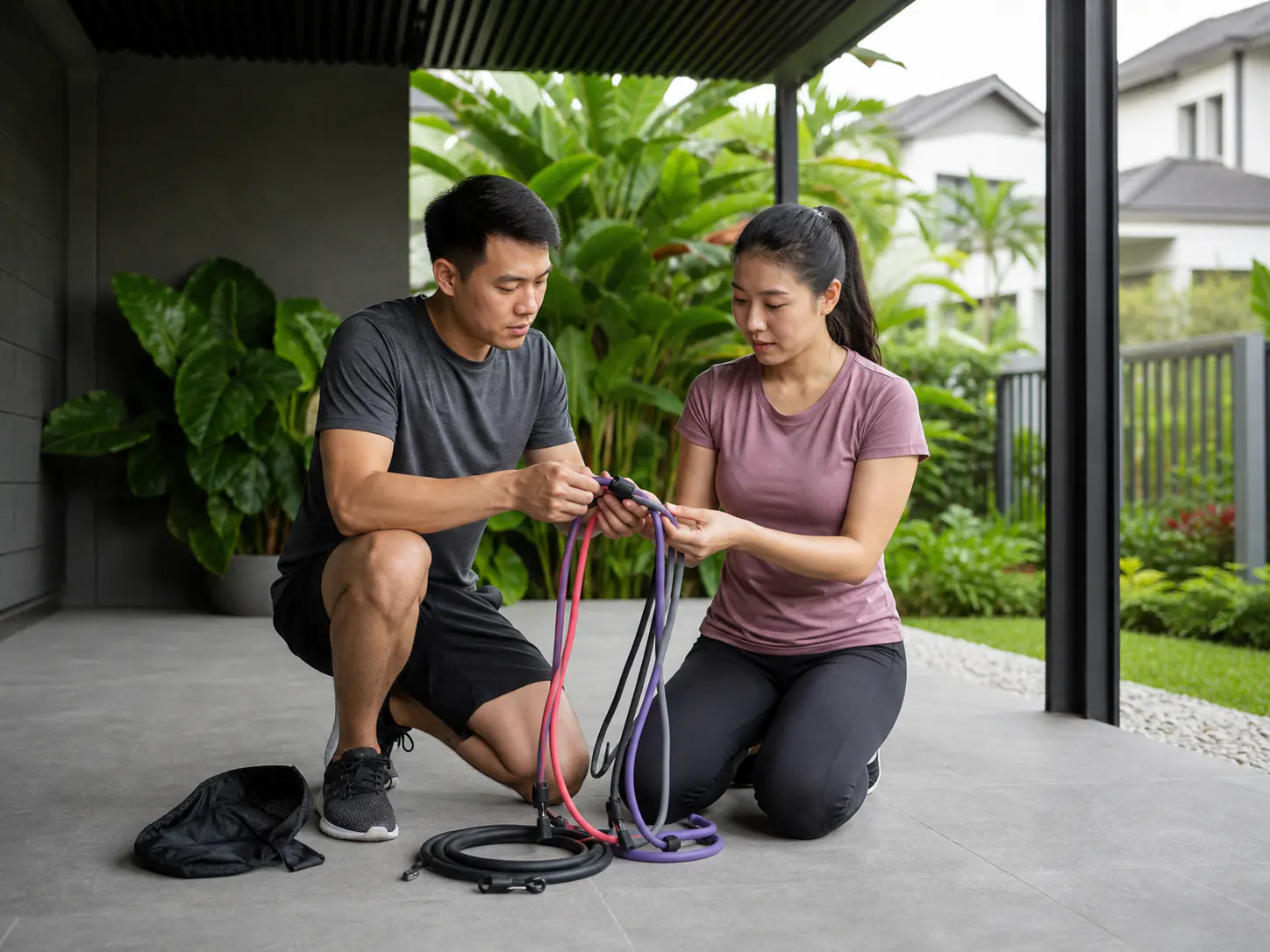
Fitness preparation on a shaded Klang Valley residential terrace

It is not just the heat in Malaysia, it is the humidity that comes with it. When the air is already thick with moisture, your sweat cannot evaporate properly, and evaporation is how sweating actually cools you. So you drip constantly, your body temperature climbs anyway, and your heart works harder than the same workout would demand in a dry climate. That heavy, drained feeling is real.

The answer is not to avoid training but to respect what humidity does and plan for it. Drink more than you think you need, replace salt on heavy-sweat days, and accept that your heart rate will sit higher for the same effort. Your body does adapt within a couple of weeks of consistent training, and humid sessions stop feeling like wading through soup.

Why humidity hits harder than heat alone

In dry heat, sweat evaporates and pulls heat away from your skin. In humid heat, the air is already saturated, so sweat just runs off without cooling you. Your core temperature keeps rising, your heart rate climbs to shed heat through the skin, and a moderate session feels much harder than the numbers suggest.

A simple hydration plan

  • Around 500ml of water in the hour before training
  • Small sips every ten to fifteen minutes during the session
  • Weigh the sweat loss on hard days, drink to replace it
  • Add electrolytes when the session is long or drenching

Salt is not optional here

On a heavy sweat day you lose a surprising amount of salt, and plain water alone can leave you feeling washed out or even light-headed. An electrolyte tablet, a pinch of salt in your water, or a proper meal afterwards replaces what you lost. This matters far more in humid Malaysia than in cooler climates.

Letting your body adapt

  1. Expect the first week or two to feel harder than usual
  2. Keep sessions consistent rather than sporadic
  3. Do not judge progress by how much you sweat
  4. Notice your heart rate settling over a couple of weeks
  5. Use fans or air-con indoors to help the hardest efforts

Frequently Asked Questions

Why do I sweat so much more here than overseas?+

Because humidity stops your sweat evaporating, so your body keeps producing more to try to cool down. You are not less fit, the wet air simply makes the cooling system work overtime, and it shows on your shirt.

How much water should I drink when training?+

Roughly 500ml in the hour before, small sips throughout, and enough afterwards to replace what you lost. On drenching days add electrolytes. Do not wait until you are thirsty, in this climate you are already behind by then.

Do I really need electrolytes or is that marketing?+

For a short easy session, water is fine. For long or very sweaty sessions in Malaysian humidity, replacing salt genuinely helps you avoid the washed-out, dizzy feeling. A pinch of salt or a cheap tablet does the job.

Will humid training ever feel easier?+

Yes. Your body adapts within about two weeks of consistent training, you cool more efficiently and your heart rate settles for the same effort. The first couple of weeks are the hardest, then it becomes normal.

Continue exploring

Why KinesioFitness

Results You Can Expect

Realistically, you can expect rising strength within weeks, better energy and sleep early, and visible body changes over a couple of months of consistency. We do not promise dramatic 30-day transformations. We promise steady, honest progress that lasts, which is what actually changes your life.

Compare this option →
Programmes

Weight-Loss Training

Weight-loss training combines strength work, sensible conditioning and realistic food habits so you lose fat while keeping the muscle that keeps you toned. No crash diets, no punishing cardio, just a sustainable plan built around your body, your schedule and Malaysian food.

See what it includes →
Why KinesioFitness

Why 1-to-1 Beats Group

In a group class the coach splits attention across a room and the workout is one-size-fits-all. In 1-to-1 training, every minute, every cue and the entire plan is built around you. That is why 1-to-1 produces faster, safer results, especially for beginners and anyone with a niggle.

Compare this option →
Programmes

Post-Rehabilitation Fitness

Post-rehabilitation fitness is for people who have completed their rehab and been cleared by a doctor or physio to exercise again. We are not physios and do not treat injuries, we take over once you are discharged, rebuilding strength and confidence so you return to full, active life.

See what it includes →
Weight Loss

Ramadan and Body Composition

Ramadan can go either way for your body: many people lose muscle and gain fat from heavy iftars and no training, but with a smart approach you can hold muscle and even lean out. It comes down to protein at suhoor and iftar, sensible training timing, and not treating iftar as a feast.

See the coaching approach →
Weight Loss

Weight-Loss Plateaus

A weight-loss plateau is when progress stalls for several weeks despite consistent effort. Some are real slowdowns as your body adapts; many are just water, tracking drift or the scale hiding real change. We diagnose which it is and adjust before you panic-cut calories to nothing.

See the coaching approach →

Want help applying this guide to your own training?

Private coaching adapts exercise choice, loading and progression to your level, equipment and goal.

Ask a question first Request an assessment time