Skip to content

Practical fitness guide

Sets and Reps: What The Numbers Actually Mean

A rep is one full movement of an exercise; a set is a group of reps done back to back before you rest. "3 sets of 10" means ten reps, rest, repeat twice more. The rep range you choose nudges your result toward strength, muscle or endurance.
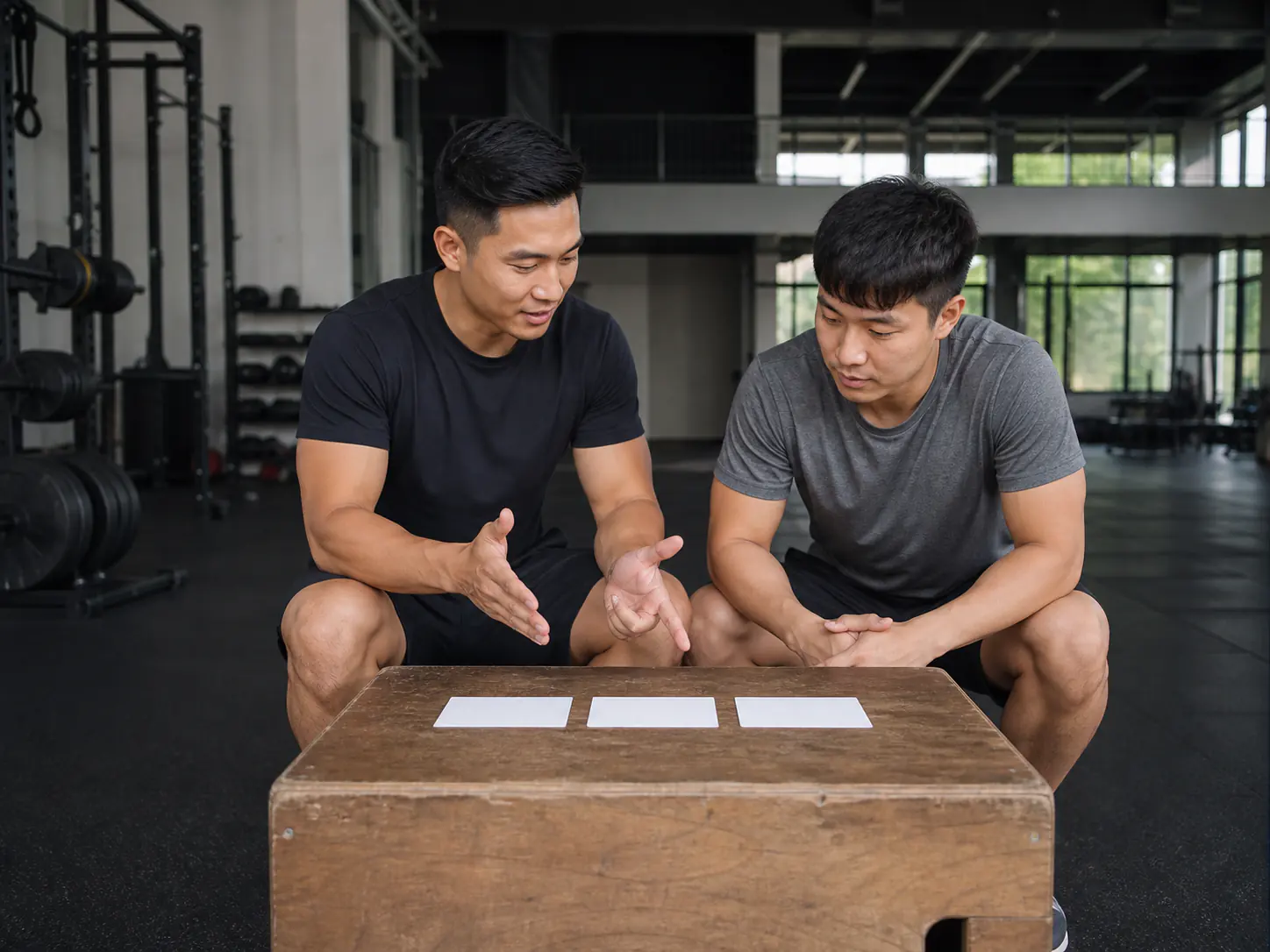
A trainer explaining a practical fitness guide

Every gym plan is written in the same shorthand: sets and reps. A rep is one clean repetition, one squat, one push-up. A set is a batch of reps you do without stopping, then you rest. So "3 x 10 squats" is thirty squats total, split into three rounds with rest between. Once you see it, the whole programme suddenly reads clearly.

Beginners often obsess over the perfect number. The honest truth is that a wide range works, and effort and consistency matter far more than whether you did 8 or 12. What follows is a plain guide to picking sets and reps that fit your goal, without overthinking it.

What the rep range roughly does

Lower reps with heavier weight lean toward raw strength. Moderate reps build muscle size well and are the bread and butter for Many people. Higher reps with lighter weight build muscular endurance and are gentler on the joints. None of these are magic lines, they overlap a lot.

  • Around 3 to 6 reps: strength focus, heavier load
  • Around 8 to 12 reps: muscle size, the all-rounder
  • Around 15 to 20 reps: endurance, lighter load
  • The last two reps should always feel challenging

How many sets do you need

For most beginners, two to three working sets per exercise is plenty to start seeing change. More is not automatically better, extra sets add fatigue you have to recover from. As you get stronger and have more time, you can add sets to the lifts that matter most to you.

Why effort beats the exact number

Ten reps that are easy do almost nothing. Ten reps where the last two are a real fight do a lot. This is why a good trainer watches how hard the set looks, not just the number on the page. Pick a weight where the target reps are genuinely tough but your form holds.

A simple starting template

  1. Pick 4 to 6 exercises covering your whole body
  2. Do 2 to 3 sets of each
  3. Use 8 to 12 reps as your default range
  4. Leave one or two reps in the tank early on
  5. Add reps or weight over the weeks

Frequently Asked Questions

Is 3 sets of 10 the best?+

It is a fine default, not a magic formula. It gives enough volume for beginners in the muscle-building range. As you progress you will vary sets and reps by exercise and goal, but you cannot go far wrong starting here.

Should I count warm-up sets?+

No. Warm-up sets with lighter weight prepare you but do not count toward your working sets. When a plan says three sets, it means three hard working sets after any warm-ups you need.

More reps for fat loss?+

Not really. Fat loss is driven mostly by your overall diet and activity, not the rep range. Lifting in any sensible range while eating in a slight calorie deficit keeps muscle while you lose fat.

What if I cannot finish all the reps?+

Stop a rep or two before your form breaks, rest, and reduce the weight next set if needed. Grinding out ugly reps to hit a number raises injury risk with little extra benefit.

Continue exploring

Programmes

Functional Fitness

Functional fitness trains your body for the things you actually do, carrying shopping up to the condo, picking a child off the floor, twisting to reach the back seat. We build strength, stability and mobility in real movement patterns, not isolated machine work, so daily life gets easier.

See what it includes →
Programmes

Mobility Training

Mobility training restores the range of motion desk life and age quietly take away, stiff hips, tight shoulders, a locked-up back. We coach controlled movement through full ranges so you squat deeper, reach higher and move without that stiff, creaky feeling.

See what it includes →
Personal Training

Private 1-to-1 Personal Training

Private one-to-one training gives you one coach for the full session, a plan based on your starting point, and real-time guidance on technique, load and progression. Choose the Putra Heights centre, your home or a suitable condo gym across KL and Selangor.

Compare this option →
Weight Loss

Toning vs Fat Loss

Toning is not a real physiological process, the "toned" look is simply having some muscle with less fat covering it. So getting toned means two things: build a little muscle with strength training and lose fat. Light weights and high reps alone will not do it. We show you what actually works.

See the coaching approach →
Goals

Build Muscle

Building muscle means adding lean tissue through progressive strength training and eating slightly more, especially protein. We coach the lifts, load them up over time, and track your numbers 1-to-1 so you gain size and strength without wasted months guessing in the gym.

See the coaching approach →
Goals

Do Your First Pull-Up

Getting your first pull-up is a specific strength goal with a clear path: build your back and arm pulling strength through progressions like assisted and negative reps until you can lift your full bodyweight once. We coach that ladder 1-to-1 so you actually get there.

See the coaching approach →

Want help applying this guide to your own training?

Private coaching adapts exercise choice, loading and progression to your level, equipment and goal.

Ask a question first Request an assessment time