Exercise technique guide
How to Do a Hip Thrust
The hip thrust has your upper back on a bench while you drive your hips up against a weight. It lets you load the glutes heavily through a full range, making it one of the best exercises for hip strength, athletic power and a resilient lower back.
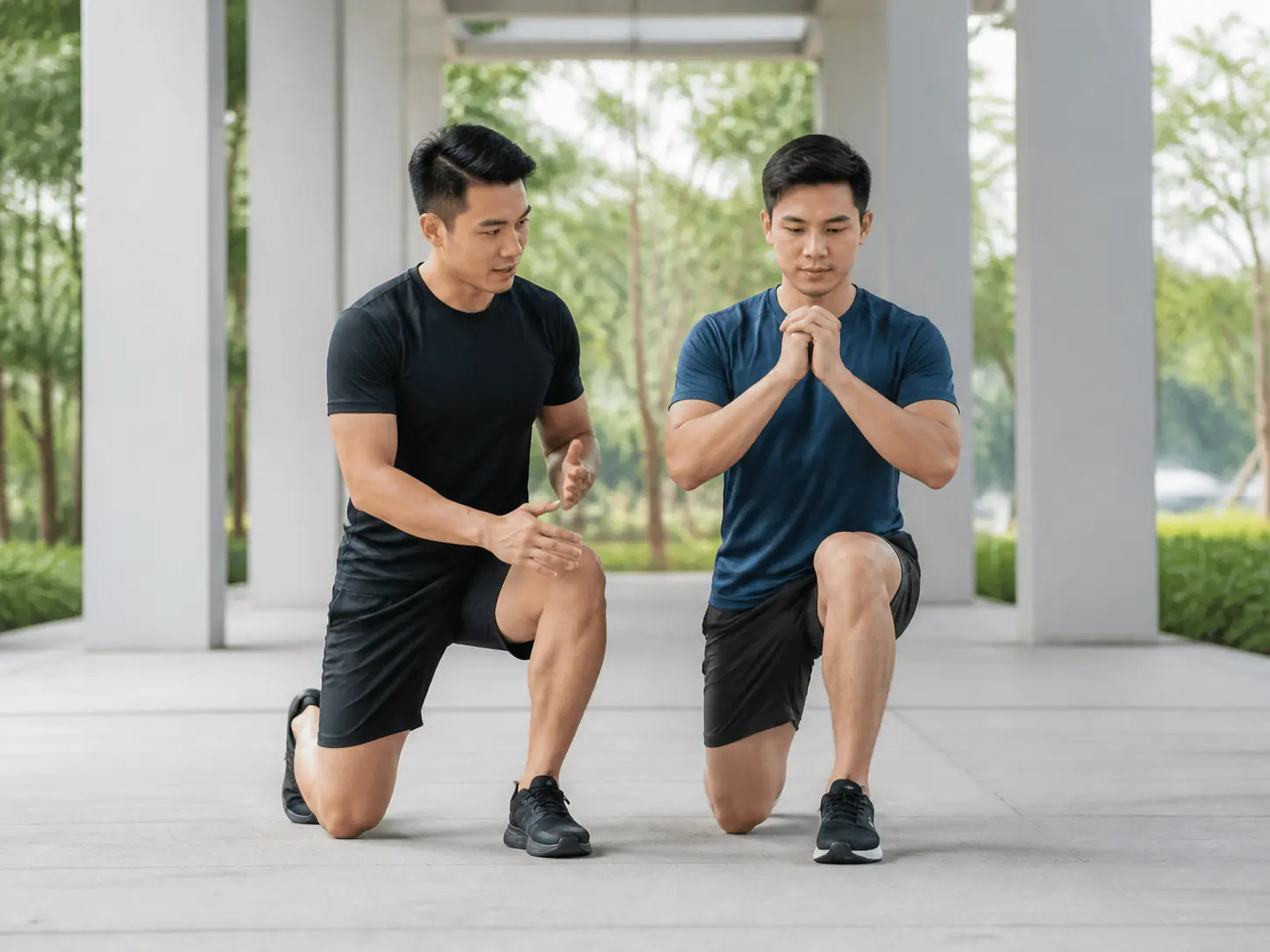
Once glute bridges feel easy, the hip thrust is the natural progression. Resting your upper back on a bench gives a bigger range and lets you add serious load, which is why it is the go-to for building genuinely strong glutes.
You need a bench and a weight, so it fits a condo gym or our Putra Heights centre. Strong glutes power your sprints, protect your back and make everyday lifting feel easy, whatever your goal.
What it trains and who it suits
It targets the glutes through a long range under heavy load, with the core and hamstrings assisting. It suits athletes chasing power, anyone building a strong backside, and people rehabbing hip strength.
Because the bench supports your back, you can load it heavily without the balance demands of a squat, making it efficient for pure glute strength.
Step-by-step cues
- Sit on the floor with your upper back against a bench
- Roll a weight or place a dumbbell over your hips
- Plant your feet flat, shins vertical at the top
- Drive through your heels and thrust your hips up
- Squeeze hard at the top, then lower with control
Common mistakes and quick fixes
- Overarching the back at the top, keep ribs down and chin tucked
- Feet too far out, set them so shins are vertical at lockout
- Not reaching full extension, thrust until hips are level with knees
- Bouncing the weight, control the lowering each rep
Regressions, progressions and when to stop
Too hard? Return to floor glute bridges. Too easy? Add load, pause at the top, or try single-leg thrusts. At home a sturdy sofa and a dumbbell work; at our centre we load a barbell with a pad for comfort.
- Stop if you feel sharp low-back pain rather than a glute contraction
- See a professional if the front of your hip pinches under load