Skip to content
nav.senior-fitness

Returning to Strength After Ankle Rehabilitation in KL & Selangor

In short

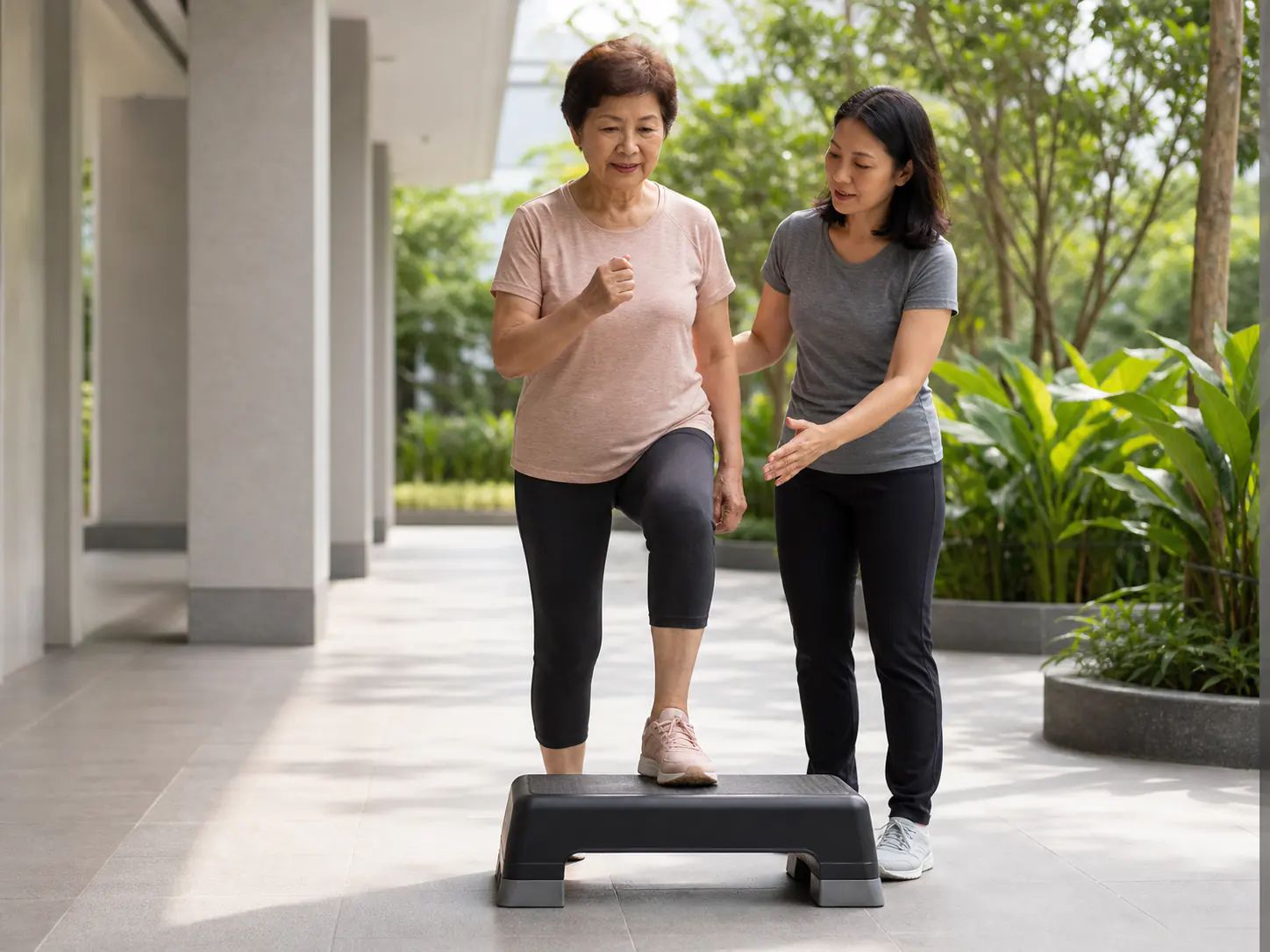
Returning after ankle rehabilitation means rebuilding strength, stability and confidence in an ankle that has been treated and cleared. A trainer strengthens the ankle and restores balance, respecting your physio's guidance, at our centre or your home.
Written & reviewed by M. Thurairaj & team, Registered Physiotherapist & Certified Trainers

An ankle that has been badly sprained, fractured or operated on rarely feels the same afterwards, even once rehab is done. It can feel weak, wobbly on uneven ground, and prone to giving way, which makes people walk cautiously and avoid kerbs, slopes and uneven pavements. Once your physiotherapist has finished and cleared you, targeted strength and balance training rebuilds an ankle you can trust on any surface.

This is for ankles that have completed rehabilitation and been cleared to exercise, not ankles still swollen, painful or in treatment. If your ankle is an active problem, that stays with your physio or doctor. Once you are through it, we rebuild the strength and the balance reactions that keep the ankle stable, so walking on Malaysia's famously uneven pavements stops feeling like a gamble.

Why the ankle feels unstable after rehab

After an ankle injury, both the strength around the joint and its sense of position fade, leaving it weak and slow to react on uneven ground. That is why a rehabbed ankle can still feel like it might give way. Rebuilding strength and retraining balance reactions restores real stability and the confidence that comes with it.

What we rebuild

  • Strength in the ankle and lower leg for stability
  • Balance reactions that catch a stumble on uneven ground
  • Calf and foot strength for confident walking and stairs
  • Steady, trusting movement on slopes and rough surfaces

Cleared ankles only, carefully

We only train ankles that have finished rehabilitation and been cleared to exercise, and we work within any guidance your physio gave. We progress balance and strength gradually, always with support to hand early on, and if pain or swelling returns we stop and refer you back rather than pushing on.

From wary to sure-footed

  1. Confirm your ankle has been cleared to return to exercise
  2. Review your rehab and any movements to avoid
  3. Rebuild ankle and lower-leg strength
  4. Retrain balance reactions on progressively harder surfaces
  5. Return to confident walking on any ground

Frequently Asked Questions

My ankle still feels like it might give way. Can training fix that?+

Usually yes, once you are cleared to exercise. That giving-way feeling comes from weakness and slowed balance reactions, both of which respond well to targeted training. We rebuild them gradually so the ankle feels stable again.

I am nervous on uneven pavements since my ankle injury. Can you help?+

Yes. We retrain the balance reactions and strength that keep the ankle stable on uneven ground, progressing safely. Most people regain the confidence to walk on rough surfaces without that constant wariness.

Is balance work safe on a previously injured ankle?+

Once cleared and progressed carefully with support to hand, yes, and it is exactly what rebuilds stability. We start easy and only increase the challenge as your ankle proves it is ready.

Should my ankle be fully healed before I start?+

Yes. We take over once your physiotherapist or doctor has completed treatment and cleared you to exercise. While the ankle is still swollen, painful or in treatment, that stays with them first.

Related pages

nav.senior-fitness

Age-Related Muscle Loss (Sarcopenia)

Age-related muscle loss, or sarcopenia, is the gradual decline in muscle and strength that weakens you with age. Resistance training is the most effective way to slow and reverse it, coached safely at our Putra Heights centre or your home.

nav.senior-fitness

Balance Training for Seniors

Balance training for seniors improves stability, reaction and confidence on your feet, reducing the wobble that leads to falls. A trainer coaches safe balance drills alongside the leg strength that makes balance possible, at our centre or your home.

nav.senior-fitness

Bone Health and Strength

Bone health strength training uses weight-bearing and resistance exercise to support bone density and reduce fracture risk. A trainer builds a safe, bone-friendly plan coordinated with your medical advice, at our Putra Heights centre or your home.

nav.senior-fitness

Carrying Groceries with Ease

Carrying groceries with ease comes from grip, arm, back and core strength trained for real-life loads. A trainer builds the practical strength to carry your own shopping safely, without straining your back, at our Putra Heights centre or your home.

nav.senior-fitness

Chair Rise Strength

Chair rise strength is the leg and hip power to stand up from a chair without pushing on your arms. It is a key marker of independence, and a trainer can rebuild it with targeted, safe practice at our Putra Heights centre or your home.

nav.senior-fitness

Choosing a Trainer for an Older Adult

Choosing a trainer for an older adult means finding someone experienced with ageing bodies, patient, safety-focused, and honest about when to refer to a doctor. This guide covers what to look for, the questions to ask, and the red flags to avoid.

Ready to start?

Train at our Putra Heights centre, your home, or your condo gym

WhatsApp Book an Assessment