Skip to content

Coaching for your starting point

Building Chair Rise Strength for Seniors in KL & Selangor

Chair rise strength is the leg and hip power to stand up from a chair without pushing on your arms. It is a key marker of independence, and a trainer can rebuild it with targeted, safe practice at our Putra Heights centre or your home.
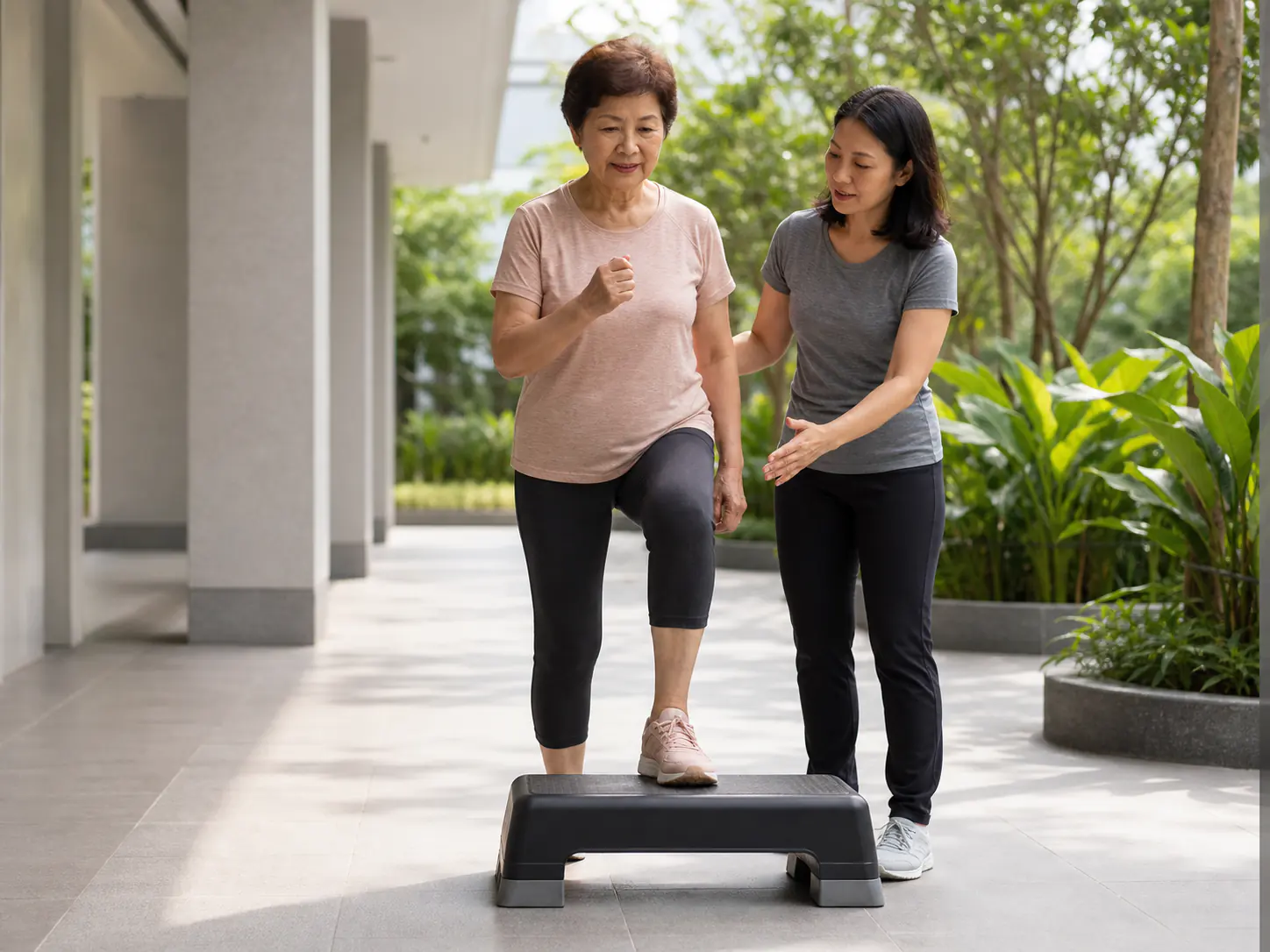
An older adult completing a supervised low step-up

Standing up from a chair sounds trivial until it is not. When it starts taking a rock forward, a push on the armrests, or two or three attempts, it is a clear sign that leg and hip strength has faded. This one movement is so telling that health professionals use it to measure how well someone is ageing. The reassuring part: it is highly trainable, at any age.

We treat the sit-to-stand as both a test and a training tool. It shows us exactly how much leg strength you have, and it is one of the best exercises to rebuild that strength safely. Practise it correctly and progressively, and getting out of chairs, the car, the sofa and the toilet stops being a daily struggle. That is a direct, meaningful gain in independence.

Why chair rise strength matters so much

You stand up from something dozens of times a day. When that becomes hard, life shrinks, you avoid low chairs, dread public toilets, and lean on others. Rebuilding this strength restores confidence and keeps you doing things independently, which is exactly what training at this stage is for.

How we build it

  • Sit-to-stand practice from a comfortable height first
  • Gradually lowering the seat height as strength grows
  • Adding light resistance once the movement is solid
  • Strengthening hips, thighs and core that power the rise

Safe from the first session

We always start from a height you can manage, with a stable chair and support within reach. There is no straining or risky effort, just steady, correct repetitions that build strength without wobble. As you improve, we make the movement gradually harder in controlled steps.

The path to standing up easily

  1. Assess how you currently rise and where strength is lacking
  2. Practise controlled sit-to-stand from a supportive height
  3. Lower the seat and add reps as strength improves
  4. Introduce light load to keep progressing
  5. Transfer the strength to low sofas, cars and toilets

Background guidance

This page is written to align with the general public-health guidance below. These sources do not endorse KinesioFitness, and this page is not medical advice.

How we create and check content →

Frequently Asked Questions

I have to push on my arms to stand, can that change?+

Very often, yes. Needing your arms usually means your legs need strengthening, and that responds well to training. Many seniors regain the ability to stand using their legs alone within weeks.

Is repeated standing up safe for my knees?+

Done with good technique and sensible progression, it is generally safe and actually strengthens the muscles that protect your knees. If you have significant knee pain, we screen it first and adjust or refer.

Can we practise this at home on my own chair?+

Yes, and it is ideal. Training on your actual chairs, sofa and bed makes the strength directly relevant. We come to you and use your own furniture as the equipment.

How long until standing up feels easier?+

Many seniors feel a clear difference within three to four weeks of regular practice. Because you use the movement daily, improvements tend to be noticed quickly in ordinary life.

Continue exploring

Assessments

Sit-to-Stand Test

The sit-to-stand test counts how many times you can rise from a chair and sit back down in 30 seconds, or times five rises. It reflects leg strength and everyday function, especially for older adults. It is a simple fitness marker we track and improve, not a diagnostic medical test.

See how it works →
Assessments

Single-Leg Balance Test

The single-leg balance test times how long you can stand steadily on one leg. It reflects stability, ankle and hip control, and fall risk, especially with age. We do it safely with support nearby and track it as a fitness marker we can improve, not as a diagnosis of any condition.

See how it works →
Personal Training

Centre-Based Personal Training

Centre-based coaching gives you access to the Putra Heights training space, a wider equipment range and one-to-one guidance without relying on a busy commercial gym floor. It suits beginners who want a calm place to learn and clients who need heavier equipment to progress.

Compare this option →
Personal Training

Private 1-to-1 Personal Training

Private one-to-one training gives you one coach for the full session, a plan based on your starting point, and real-time guidance on technique, load and progression. Choose the Putra Heights centre, your home or a suitable condo gym across KL and Selangor.

Compare this option →
Pricing

Travel Zones & Fees

Home and condo visits are priced by travel zone, which reflects distance and typical traffic from our Putra Heights base. Nearer areas like USJ and Subang sit at the low end; farther ones like KLCC or Cyberjaya at the high end. The zone is baked into the quoted rate, never added later as a surprise.

Understand the cost →
Pricing

Home Visit Pricing

Home-visit personal training runs RM180-RM350 per session. The gap above centre pricing covers the trainer's travel time and fuel to your area, not a better workout. Nearer areas like Putra Heights and Subang sit lower; farther ones like Cyberjaya or KLCC sit higher.

Understand the cost →

Want to know whether this training suits you?

Tell us your starting point, goal and what makes consistency difficult. We will explain the realistic options.

Ask whether this suits me Request an assessment time