Skip to content

Your first step

The Sit-to-Stand Test: Leg Strength Made Simple

The sit-to-stand test counts how many times you can rise from a chair and sit back down in 30 seconds, or times five rises. It reflects leg strength and everyday function, especially for older adults. It is a simple fitness marker we track and improve, not a diagnostic medical test.
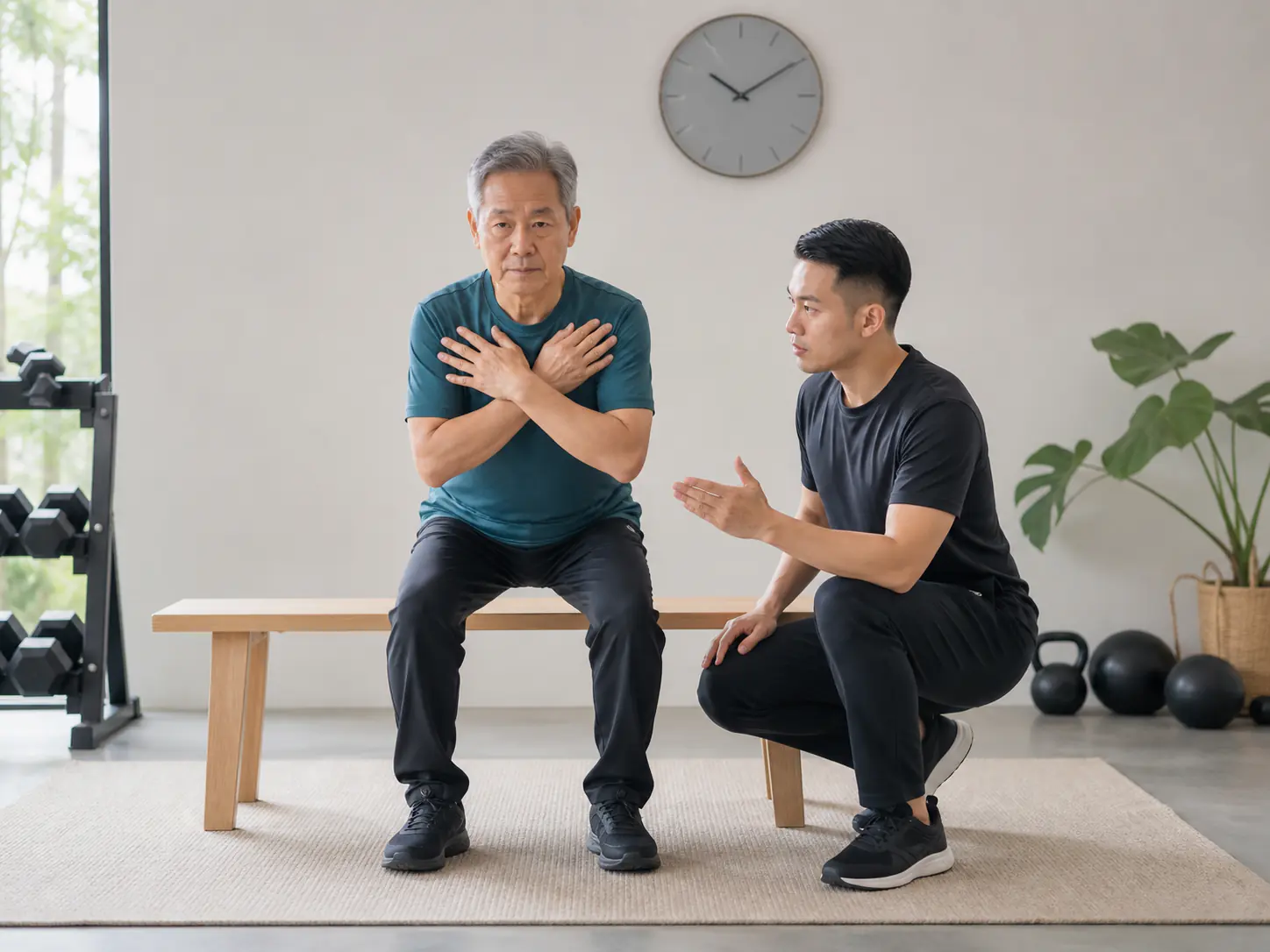
A trainer observing a sit-to-stand fitness assessment

Standing up from a chair is something you do dozens of times a day without thinking, until it starts to get hard. The sit-to-stand test turns that everyday movement into a simple, honest measure of leg strength and function. All it takes is a sturdy chair and 30 seconds, which makes it perfect for beginners, older adults and anyone training at home.

It maps beautifully onto real life. Getting off a low sofa, up from the floor after playing with grandkids, or out of a car all rely on the same leg strength this test captures. When your score climbs over the weeks, you feel it in those daily moments too, that is what makes it such a satisfying marker to chase.

What the test tells us

The number of stands you manage reflects lower-body strength, endurance and how well you coordinate the movement. It is one of the clearest windows into everyday leg function, which is exactly what keeps people independent and confident as they age.

We compare your score to general age-based ranges as a rough guide, then focus on your own improvement. Beating your last score is the goal, not hitting someone else's number.

Who benefits most from it

  • Older adults tracking strength and independence
  • Beginners who want a simple, repeatable marker
  • Home trainers with just a chair to work with
  • Anyone rebuilding leg strength after a quiet period
  • Clients who find the gym-style tests intimidating

How to do the sit-to-stand test

  1. Use a sturdy, stable chair against a wall, no wheels
  2. Sit with arms crossed over your chest, feet flat
  3. Stand fully and sit back down, controlled, for 30 seconds
  4. Count every full stand you complete in that time
  5. Record it and retest every few weeks to track progress

Keeping it safe and honest

We always have support nearby and stop if you feel unsteady, dizzy or sharp pain. The test measures fitness, not health, a low score is a starting point to build from, not a diagnosis. If standing up is painful rather than just hard, we note it and suggest a physio look before loading those legs.

Frequently Asked Questions

What is a good sit-to-stand score?+

It depends on your age and starting point. There are rough age-based ranges, but we care far more about you beating your own previous score than matching a general benchmark.

Is this test safe for older adults?+

Generally yes, and it is one of our favourites for them. We use a sturdy chair, keep support nearby, and stop immediately if there is unsteadiness, dizziness or pain rather than pushing on.

Does a low score mean something is wrong with me?+

No. It is a fitness marker, not a diagnosis. A low score simply shows where your leg strength starts, and this is one of the areas that tends to improve quickly with training.

Can I do this test at home?+

Yes, it is ideal for home. All you need is a sturdy chair against a wall and a timer. It is one of the easiest ways to measure and track real leg strength without any equipment.

Continue exploring

Personal Training

Your First Session

Your first session is an assessment plus a gentle introductory workout, not a fitness test you can fail. We take your history and goals, check how you move, and coach a light first workout so you leave knowing what to expect and how to prepare for the next one.

Compare this option →
Why KinesioFitness

Assessment-Led Coaching

Assessment-led coaching means we test before we prescribe. Before your first real workout we screen how you move, what you can lift, your history and your schedule, then build a plan on facts, not a template. It is the single biggest reason our clients progress safely.

Compare this option →
Programmes

Functional Fitness

Functional fitness trains your body for the things you actually do, carrying shopping up to the condo, picking a child off the floor, twisting to reach the back seat. We build strength, stability and mobility in real movement patterns, not isolated machine work, so daily life gets easier.

See what it includes →
Why KinesioFitness

Our Scope & Referral Policy

Our scope is fitness coaching: assessing movement, building strength, and guiding fat loss and conditioning for healthy or medically cleared adults. We do not diagnose, treat injuries or manage disease. When something falls outside our lane, we refer you to a doctor or physiotherapist first.

Compare this option →
Programmes

Flexibility Training

Flexibility training lengthens chronically tight muscles, hamstrings, hip flexors, calves, chest, so you can bend, reach and sit comfortably again. We use guided, progressive stretching plus supporting strength so the new range sticks instead of snapping back within a day.

See what it includes →
Who We Help

Personal Training for Adults Over 50

Personal training after 50 can focus on strength, balance, bone-loading exercise, mobility and the everyday tasks you want to keep doing independently. Screening and progression are adapted to health history, medication, symptoms, current capacity and medical guidance where relevant.

See how coaching adapts →

Ready for a more structured way to train?

Start with an assessment so we understand your level, goal, schedule and preferred training location.

The request opens WhatsApp; a time is confirmed only after we reply and agree it with you.

Request an assessment time Ask a question first