Skip to content

Sport-specific coaching

Netball Conditioning in KL & Selangor

Netball conditioning builds the sharp stopping, jumping and landing control the game demands, with a strong focus on protecting knees and ankles. We train the deceleration and single-leg strength that reduce the sport's high ACL and ankle injury risk, so you play sharp and stay on court.
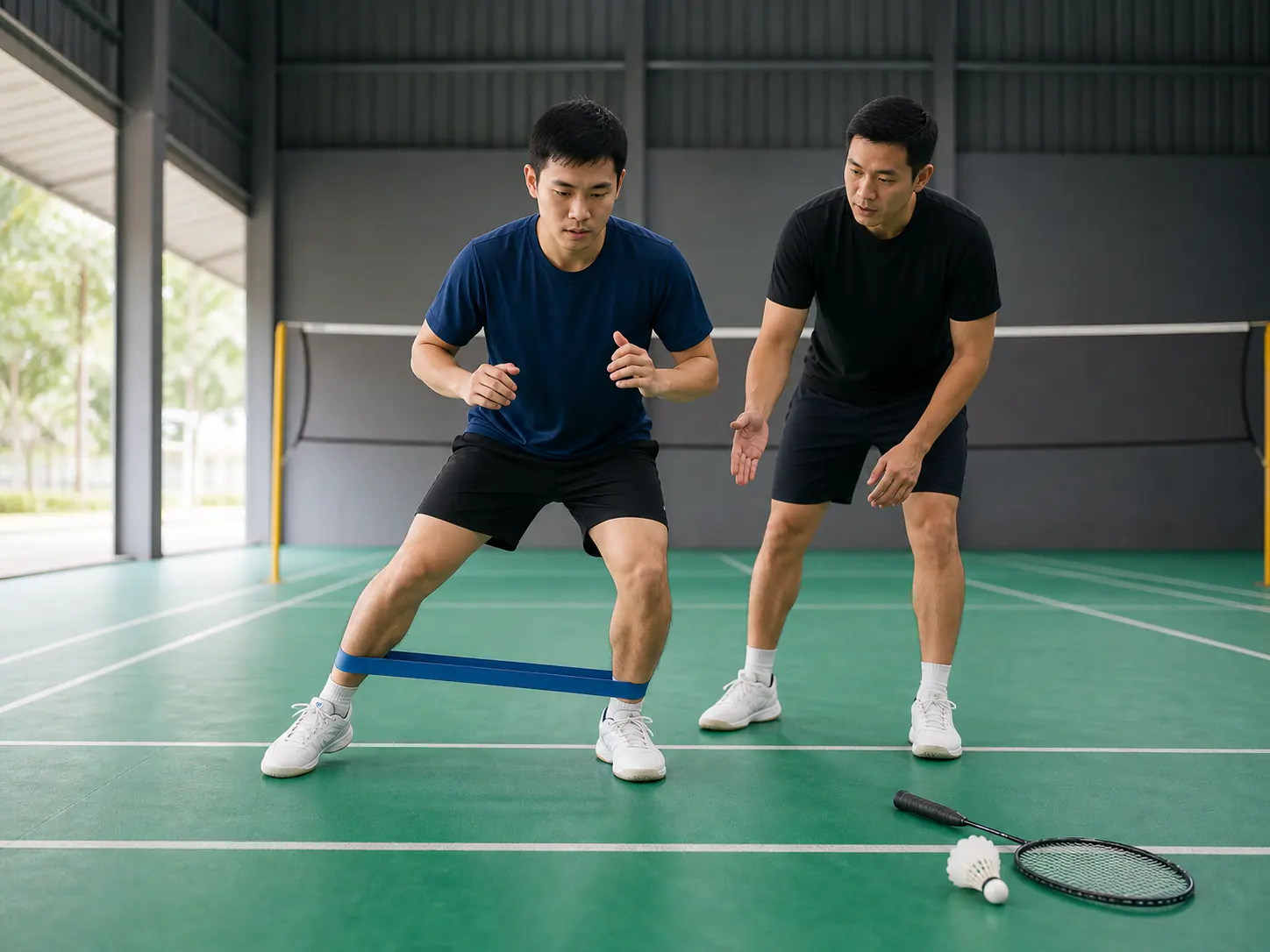
Badminton conditioning with a lateral resistance-band exercise

Netball is deceptively hard on the joints. The footwork rule means you must stop dead when you catch, so the game is full of sudden decelerations, quick pivots on a planted foot, and jumping and landing under pressure. That exact combination is why netball has one of the highest ACL and ankle injury rates in sport, especially among women. Sharp play and healthy knees both come from the same preparation.

We build the conditioning netball needs, with injury prevention at its heart: strong controlled deceleration so those hard stops do not blow out a knee, single-leg landing strength, and the agility to change direction safely. Whether you play in a Selangor league or a social team, this is the training that keeps you sharp on court and off the injury list.

Why netball is tough on knees and ankles

The footwork rule forces abrupt stops from full speed, and pivoting on a planted foot loads the knee in exactly the way that risks the ACL. Add jumping for interceptions and landing on one leg, often off-balance and under pressure, and you have a sport that demands excellent deceleration and landing control to stay safe.

The players most at risk are those who are quick but have never trained controlled stopping and single-leg landing. Building that control is the single best thing you can do for both performance and injury prevention.

What we assess and build

  • Controlled deceleration to protect the knees
  • Single-leg landing and jump strength
  • Agility and safe change of direction
  • Ankle stability for planted-foot pivots

A sample conditioning progression

  1. Weeks 1-2: build single-leg strength and landing control
  2. Weeks 3-4: add deceleration and stopping drills
  3. Weeks 5-6: agility, pivoting and jump-landing under control
  4. Weeks 7-8: game-tempo conditioning with safe stops and landings

Common mistakes and home alternatives

Players train speed but never controlled stopping, then a hard stop or awkward landing injures a knee. Others skip the warm-up entirely. At home, single-leg strength, controlled landing practice, and deceleration drills build exactly the control that protects netballers' knees and ankles.

Frequently Asked Questions

Why is netball so hard on knees?+

The footwork rule forces sudden stops and pivots on a planted foot, which loads the knee in the way that risks the ACL. We train controlled deceleration and landing to reduce that risk, which is one of the most valuable things a netballer can do.

Can training really prevent ACL injuries?+

It can meaningfully reduce the risk. Programs that build landing control, single-leg strength and safe deceleration have a strong track record in netball. It is not a guarantee, but it is well worth doing.

I keep rolling my ankle pivoting, what helps?+

Ankle stability and strength work, plus better pivoting control. We build the ankle strength and single-leg control so planted-foot pivots are safer. A badly swollen ankle needs checking first.

When should an injury be seen first?+

A knee that swells, gives way or was injured in a hard landing needs urgent assessment by a physio or doctor. Ankle injuries you cannot weight-bear on do too. We build conditioning around cleared, stable issues.

Continue exploring

Programmes

Low-Impact Training

Low-impact training builds strength and fitness without the jumping, pounding and jarring that bother sensitive joints. It suits heavier clients, older adults and anyone with cranky knees, hips or ankles, proving you can get genuinely fit while being kind to your body.

See what it includes →
Programmes

Lower-Body Strength

Lower-body strength training builds your legs, hips and glutes, the biggest muscles you own and the engine behind walking, stairs, sport and standing up. Strong legs make daily life easier, protect your knees and back, and burn plenty of energy in the process.

See what it includes →
Assessments

Single-Leg Balance Test

The single-leg balance test times how long you can stand steadily on one leg. It reflects stability, ankle and hip control, and fall risk, especially with age. We do it safely with support nearby and track it as a fitness marker we can improve, not as a diagnosis of any condition.

See how it works →
Goals

Recreational Sport Performance

Recreational sport performance training builds the strength, conditioning and resilience that make you better and more durable at the sport you love, futsal, badminton, tennis, running, hiking. We coach it 1-to-1 to complement your game, so you play harder and break down less.

See the coaching approach →
Goals

Core Strength and Flat Stomach

A strong core and a flat stomach are two separate jobs. Core strength comes from training the muscles that stabilise your spine; a flatter stomach comes from losing belly fat. We coach both together 1-to-1, so you get a back-protecting core and a tighter midsection.

See the coaching approach →
Exercise Library

Step-Up

The step-up has you drive up onto a bench or box using one leg. It builds single-leg strength that transfers straight to stairs and hills, improves balance, and is easy to scale by changing box height. A practical staple for all ages.

Learn the technique →

Ready for a more structured way to train?

Start with an assessment so we understand your level, goal, schedule and preferred training location.

The request opens WhatsApp; a time is confirmed only after we reply and agree it with you.

Request an assessment time Ask a question first