Skip to content

Sport-specific coaching

Table Tennis Fitness in KL & Selangor

Table tennis fitness builds the quick footwork, rotational core power and reaction speed the game hides behind its small movements. We train the agility, leg drive and core stability that separate club players, so your feet and reactions stay sharp deep into a long match.
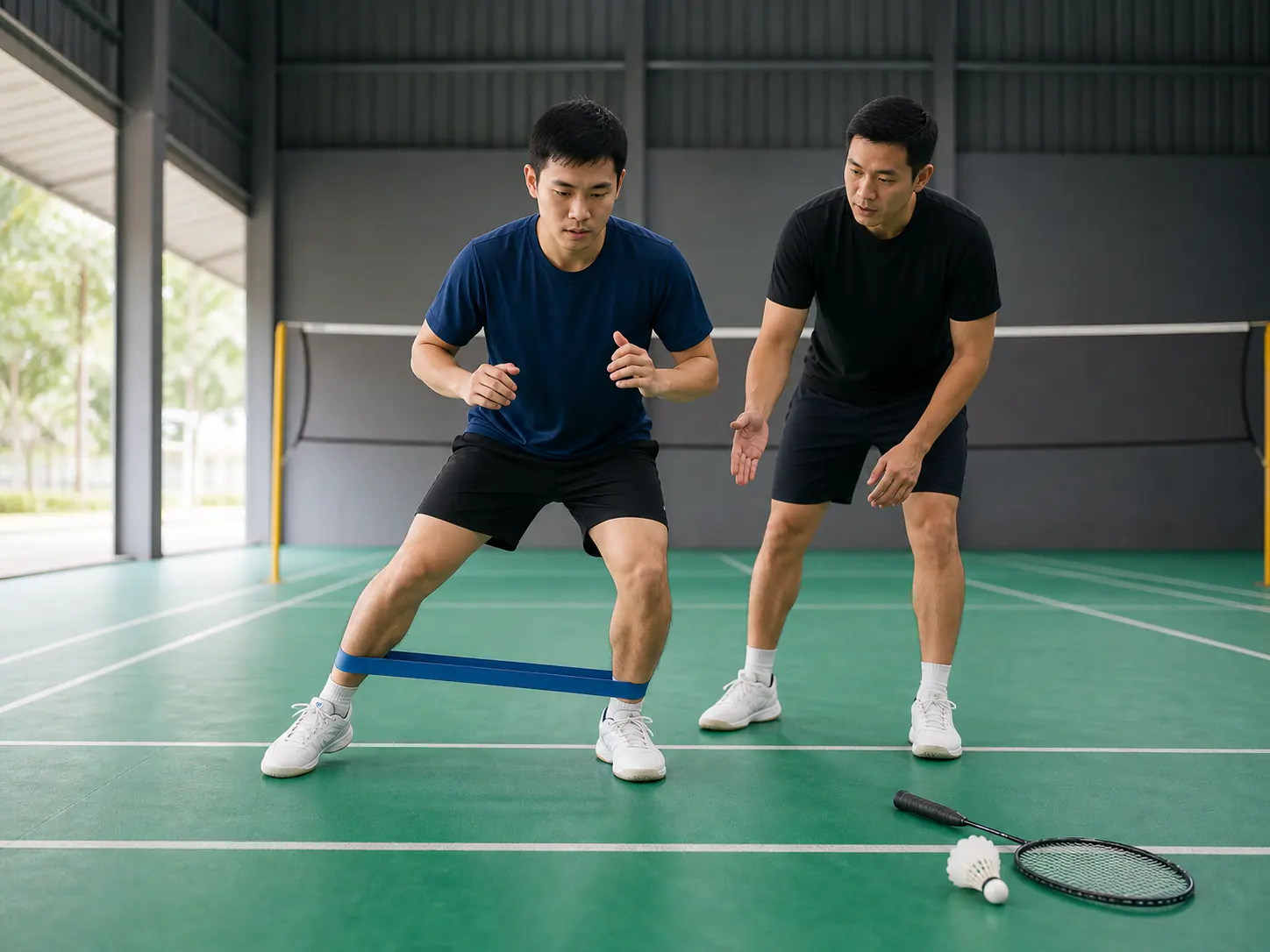
Badminton conditioning with a lateral resistance-band exercise

Table tennis looks like it is all in the wrist, but at any decent level it is a whirlwind of tiny explosive foot adjustments, rotational power from the legs and core, and reactions at the very edge of what is humanly possible. Players who neglect fitness find their footwork slows, their shots lose power and their reactions dull as a long match wears on. The margins are tiny, and fitness protects them.

We build the athletic base behind the bat: quick, precise footwork and agility to get into position, rotational core and leg power for heavier loops and drives, and the stamina to hold your speed and precision through set after set. Your coach refines your strokes; we make sure your body can still execute them in the deciding game.

The hidden physical demands

The movements look small but happen constantly and explosively, micro-adjustments, side-to-side shuffles, and rotation on every attacking shot. Over a long match these add up to a real fitness demand, and tired legs mean late footwork and weaker shots. Reaction speed also fades with fatigue, which is fatal in a fast game.

The common gaps are slow or imprecise footwork and a weak rotational core that leaks power from shots. Both are trainable off the table.

What we assess and build

  • Quick, precise footwork and lateral agility
  • Rotational core and leg power for attacking shots
  • Reaction speed and quickness training
  • Stamina to hold speed and precision across sets

A sample conditioning progression

  1. Weeks 1-2: build single-leg strength and core control
  2. Weeks 3-4: add agility and quick-feet drills
  3. Weeks 5-6: rotational power and reaction training
  4. Weeks 7-8: match-tempo conditioning to hold speed under fatigue

Common mistakes and home alternatives

Players assume table tennis needs no fitness, then wonder why they fade in long matches. Others train stroke technique only. At home, lateral shuffles, split-step drills, rotational core work and single-leg strength build the footwork and power the game quietly demands.

Frequently Asked Questions

Does table tennis really need fitness training?+

At any competitive level, yes. The footwork and rotational power are explosive and constant, and fatigue slows your feet and reactions. Off-table conditioning keeps you sharp when matches get long and tight.

My footwork slows down late in matches, why?+

Tired legs. The constant micro-movements add up, and without leg strength and stamina your footwork degrades. We build the strength and conditioning to keep your feet quick into the deciding game.

Will this add power to my shots?+

It can. Much of your shot power comes from leg drive and rotational core, not just the arm. Building those lets you generate heavier loops and drives more consistently.

When should I get an issue checked?+

Persistent shoulder, elbow or back pain that does not settle, or any sharp injury, should be seen by a physio or doctor. We coach fitness and refer when something needs clinical assessment.

Continue exploring

Goals

Improve Balance

Improving balance means training the strength, ankle control and quick reactions that keep you steady on your feet. We coach it progressively 1-to-1 so stairs, uneven pavements, wet floors and one-legged moments stop feeling risky, a foundation for confidence at any age.

See the coaching approach →
Exercise Library

Medicine Ball Rotation

The rotational medicine ball throw has you twist and throw a ball into a wall using your hips and core. It builds explosive rotational power that transfers to golf, racquet sports and everyday twisting. It trains the core to create force, not just resist it.

Learn the technique →
Programmes

Core Training

Core training builds the deep trunk muscles that stabilise your spine, protect your back and transfer force between your upper and lower body. It is about a strong, functional midsection that supports everything you do, not just chasing visible abs with endless crunches.

See what it includes →
Programmes

Sports Performance Programme

A sports performance programme develops the speed, strength, power and resilience your sport demands, whether that is football, badminton, running or cycling. We build a targeted plan around your sport and position, so you perform better on the pitch, court or road and break down less often.

See what it includes →
Goals

Recreational Sport Performance

Recreational sport performance training builds the strength, conditioning and resilience that make you better and more durable at the sport you love, futsal, badminton, tennis, running, hiking. We coach it 1-to-1 to complement your game, so you play harder and break down less.

See the coaching approach →
Exercise Library

Inverted Row

The inverted row has you pull your chest to a fixed bar while your body stays straight and your feet stay on the floor. It is a beginner-friendly bodyweight pull that builds back and grip strength, and its difficulty scales just by changing your body angle.

Learn the technique →

Ready for a more structured way to train?

Start with an assessment so we understand your level, goal, schedule and preferred training location.

The request opens WhatsApp; a time is confirmed only after we reply and agree it with you.

Request an assessment time Ask a question first