Skip to content

Sport-specific coaching

Tennis Conditioning in KL & Selangor

Tennis conditioning builds the lateral agility, rotational power and shoulder durability the court demands. We train explosive movement to the ball, a strong stable base for serving, and the core and shoulder work that keep you competitive across three sets in the heat.
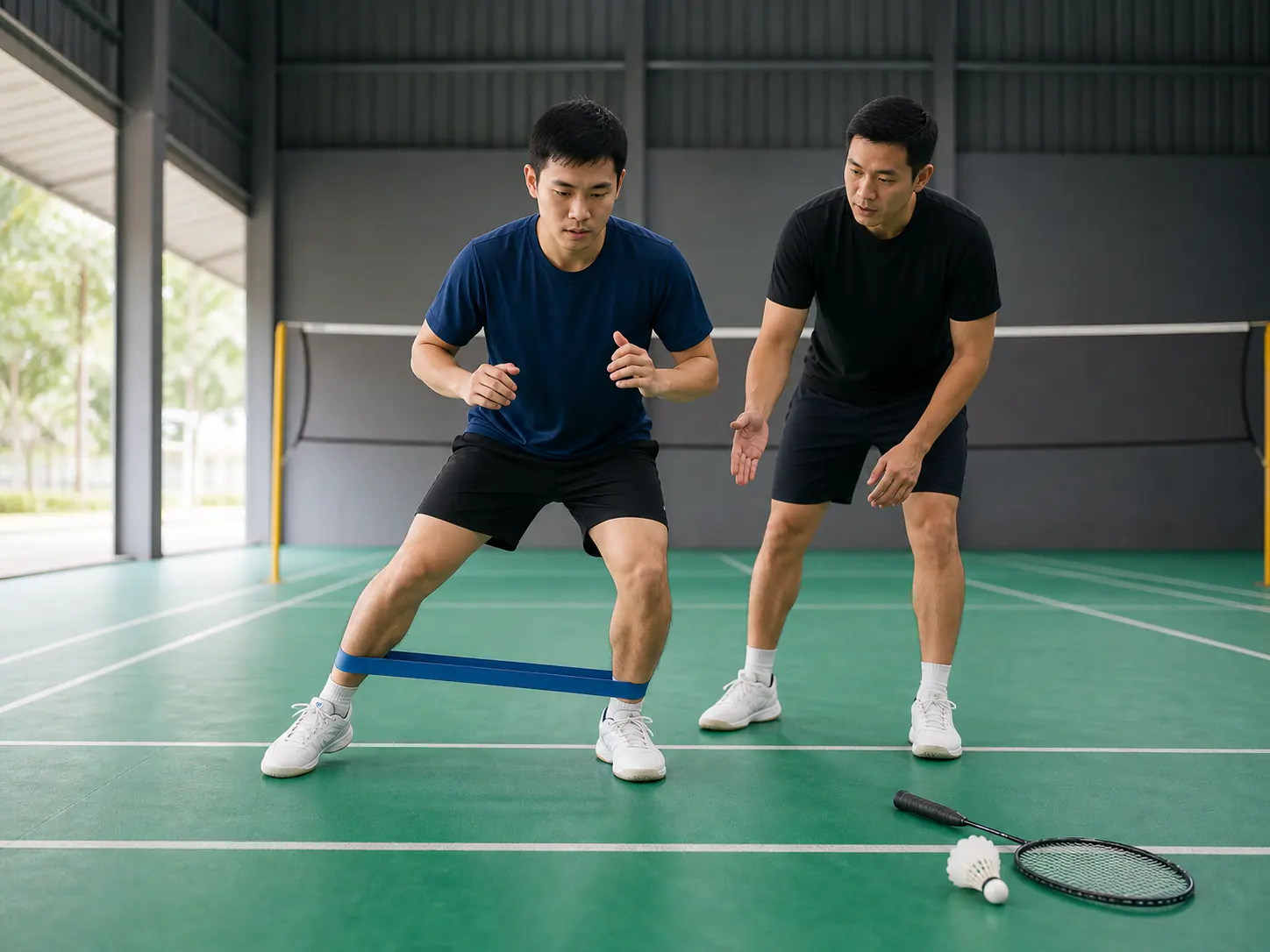
Badminton conditioning with a lateral resistance-band exercise

Tennis is stop-start over one to three hours: explosive sprints to the ball, hard braking, rotation on every groundstroke, and repeated overhead serving. That combination stresses the whole body, but the weak links are usually lateral movement, a shaky base under the serve, and shoulders that grumble after too many overheads with no off-court support.

We do not coach your forehand, your tennis coach does. We build the athletic base: lateral agility and deceleration so you reach wide balls and recover, rotational core power for heavier groundstrokes and serves, and the shoulder and hip work that keeps you injury-free through a long humid match at your club in Subang, Bangsar or wherever you play.

The physical demands of tennis

Points are short and explosive, but a match is long. You need to accelerate, brake and change direction repeatedly, generate rotational power for strokes, and serve overhead again and again. The braking and cutting load the knees and ankles, while repeated serving loads the shoulder and trunk.

The commonest gaps we see are poor deceleration control (so wide balls end in stumbles), a weak rotational core (so power leaks and the back takes strain), and an under-supported serving shoulder.

What we assess and build

  • Lateral agility and deceleration for court coverage
  • Rotational core power for groundstrokes and serves
  • Shoulder strength and control for durable serving
  • Single-leg stability for a solid hitting base

A sample conditioning progression

  1. Weeks 1-2: build single-leg strength and shoulder control
  2. Weeks 3-4: add lateral agility and deceleration drills
  3. Weeks 5-6: rotational power work for strokes and serve
  4. Weeks 7-8: match-tempo conditioning across simulated sets

Common mistakes and home alternatives

Players warm up their strokes but never their body, then tweak a shoulder or back cold. Others neglect lateral and single-leg strength, so wide balls become injuries. At home, lateral bounds, split squats, band shoulder work and rotational core drills build the exact qualities the court demands.

Frequently Asked Questions

My shoulder aches after serving, can you help?+

Often, yes. We strengthen the shoulder, upper back and trunk that support serving, which reduces overload. But a shoulder that is sharply painful, weak or catching needs a physio or doctor before you serve hard again.

Will this make me quicker around the court?+

Yes. We train lateral agility, acceleration and deceleration directly, so you reach wide balls and recover to the middle faster. It complements the footwork your coach teaches on court.

I fade in the third set, what helps?+

A mix of repeat-effort conditioning and strength so your movement quality holds when tired. We build the stamina and durability that keep your legs and strokes sharp late in a match.

How often should I train off court?+

Two short sessions a week alongside your tennis is ideal for club players. We keep the load light near match days so you arrive fresh, not flat.

Continue exploring

Programmes

Sports Performance Programme

A sports performance programme develops the speed, strength, power and resilience your sport demands, whether that is football, badminton, running or cycling. We build a targeted plan around your sport and position, so you perform better on the pitch, court or road and break down less often.

See what it includes →
Programmes

Core Training

Core training builds the deep trunk muscles that stabilise your spine, protect your back and transfer force between your upper and lower body. It is about a strong, functional midsection that supports everything you do, not just chasing visible abs with endless crunches.

See what it includes →
Assessments

Fitness vs Clinical Assessment

A fitness assessment sets a safe starting point for training, mapping strength, stamina and movement. A clinical assessment diagnoses injuries and medical conditions, and only qualified healthcare professionals do that. We do the first, never the second, and refer you on the moment something needs a doctor or physio.

See how it works →
Goals

Recreational Sport Performance

Recreational sport performance training builds the strength, conditioning and resilience that make you better and more durable at the sport you love, futsal, badminton, tennis, running, hiking. We coach it 1-to-1 to complement your game, so you play harder and break down less.

See the coaching approach →
Goals

Sustainable Weight Loss

Sustainable weight loss means losing weight at a pace you can hold and keeping it off for years, not weeks. We skip crash diets and build habits, steady eating, regular strength work and daily movement, coached 1-to-1 so the plan survives real life, festivals and travel.

See the coaching approach →
Weight Loss

Weight-Loss Training for Women

Weight-loss training for women uses strength work to drop fat while keeping, not shrinking, the shape you want. It sidesteps the crash-diet cycle, respects your energy and cycle, and builds strength that carries into daily life. No bulking, no starving, a supportive setting.

See the coaching approach →

Ready for a more structured way to train?

Start with an assessment so we understand your level, goal, schedule and preferred training location.

The request opens WhatsApp; a time is confirmed only after we reply and agree it with you.

Request an assessment time Ask a question first