Skip to content

Exercise technique guide

How to Do a Calf Raise

The calf raise has you rise up onto the balls of your feet to strengthen the calf muscles. Strong calves support walking, running, jumping and ankle stability. It needs little or no equipment and is easy to progress from two legs to one, or by adding weight.
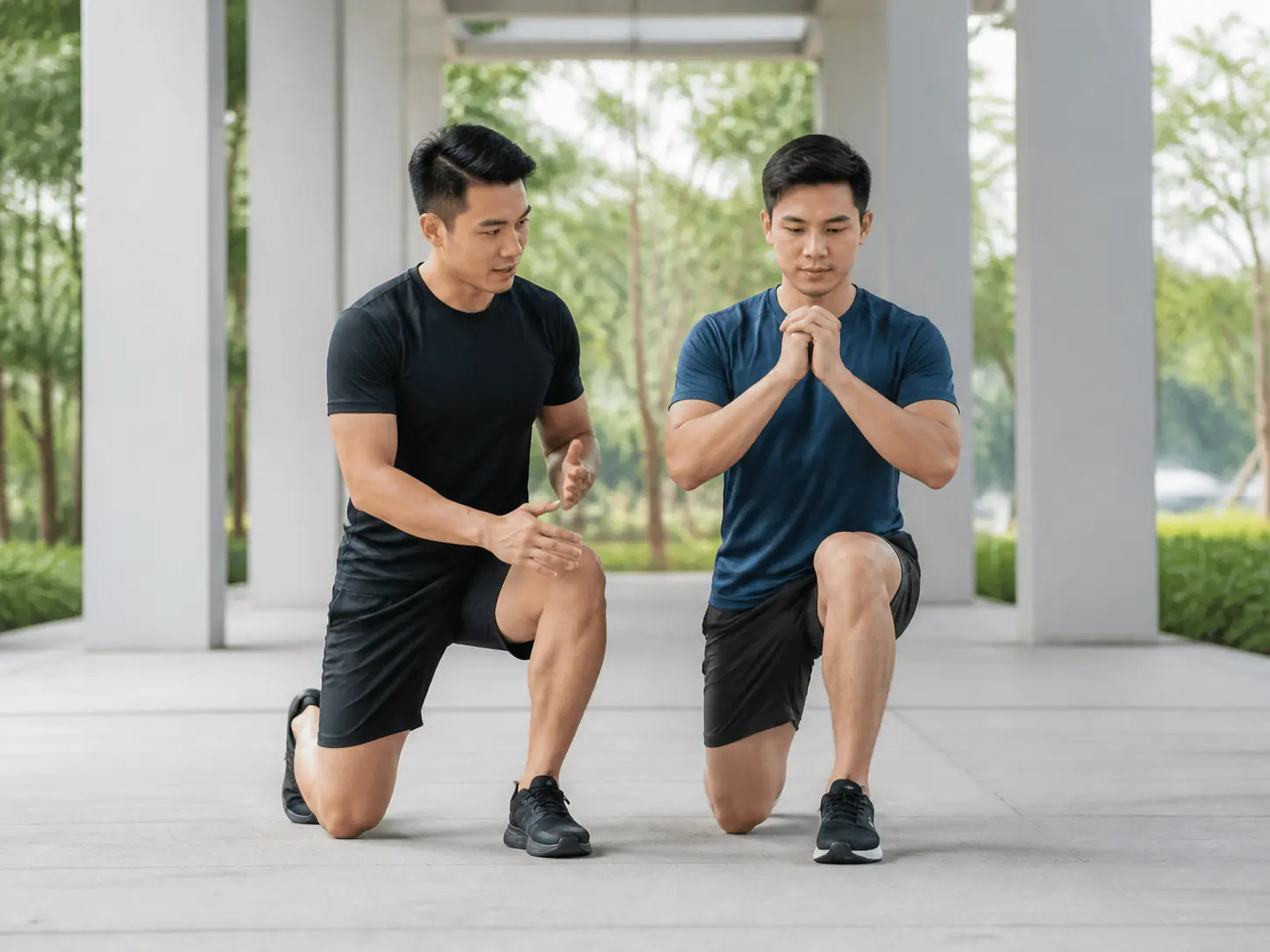
A trainer demonstrating controlled split-squat technique

The calves quietly power every step you take, yet Many people never train them directly. The calf raise fixes that, building the strength that supports walking, running, climbing stairs and keeping your ankles stable and resilient.

You can do it anywhere with just your bodyweight or a step, so it fits home or our Putra Heights centre. It is simple, low-risk, and easy to scale from two legs to one leg or with added weight as you get stronger.

What it trains and who it suits

It strengthens the calf muscles and supports ankle stability. It suits runners, walkers, older adults wanting steadier ankles, and anyone recovering calf or ankle strength cleared to train.

Because it can be done with bodyweight and scaled easily, it works for beginners and advanced trainees alike.

Step-by-step cues

  1. Stand tall, optionally with the balls of your feet on a step
  2. Hold something for balance if needed
  3. Rise up onto the balls of your feet as high as you can
  4. Pause and squeeze the calves at the top
  5. Lower slowly under control, feeling a stretch

Common mistakes and quick fixes

  • Bouncing up and down, pause at the top and lower slowly
  • Half range, rise all the way up and lower fully
  • Rushing, control the lowering to build real strength
  • Rolling the ankles out, keep the weight over the big toe

Regressions, progressions and when to stop

Too hard? Do them on flat ground with both legs and support. Too easy? Use a step for more range, go single-leg, or hold a weight. At home a stair edge works; at our centre we load them and add single-leg progressions.

  • Stop if you feel sharp ankle or Achilles pain rather than a calf stretch
  • See a professional if the Achilles tendon aches sharply during reps

Frequently Asked Questions

Why should I train my calves?+

Strong calves support walking, running and jumping, and help keep your ankles stable. They also aid balance, which matters more as you age, yet Many people never train them directly.

Should I use a step?+

A step lets you lower your heels below the toes for a bigger stretch and range. Flat ground is fine to start, and adding a step is a simple way to progress.

Straight or bent knee?+

Straight-knee raises target the larger calf muscle; bent-knee raises hit the deeper soleus. Doing both over time gives well-rounded calf strength.

How many reps should I do?+

Calves respond well to higher reps. Two or three sets of twelve to twenty controlled reps, with a squeeze at the top, is a solid starting point.

Continue exploring

Programmes

Lower-Body Strength

Lower-body strength training builds your legs, hips and glutes, the biggest muscles you own and the engine behind walking, stairs, sport and standing up. Strong legs make daily life easier, protect your knees and back, and burn plenty of energy in the process.

See what it includes →
Weight Loss

Strength Plus Cardio for Fat Loss

The best fat-loss plans use both strength and cardio, not one or the other. Strength keeps muscle and shape; cardio and walking add extra calorie burn and heart health. We show you how to combine them without overtraining, so fat drops while your body stays strong.

See the coaching approach →
Goals

Improve Balance

Improving balance means training the strength, ankle control and quick reactions that keep you steady on your feet. We coach it progressively 1-to-1 so stairs, uneven pavements, wet floors and one-legged moments stop feeling risky, a foundation for confidence at any age.

See the coaching approach →
Weight Loss

Build Muscle While Losing Fat

Building muscle while losing fat is possible if you get three things right: eat enough protein, train strength progressively, and keep the calorie deficit modest. It works best for beginners and returners, is slower than one goal alone, and needs measuring beyond the scale.

See the coaching approach →
Personal Training

Centre-Based Personal Training

Centre-based coaching gives you access to the Putra Heights training space, a wider equipment range and one-to-one guidance without relying on a busy commercial gym floor. It suits beginners who want a calm place to learn and clients who need heavier equipment to progress.

Compare this option →
Goals

Core Strength and Flat Stomach

A strong core and a flat stomach are two separate jobs. Core strength comes from training the muscles that stabilise your spine; a flatter stomach comes from losing belly fat. We coach both together 1-to-1, so you get a back-protecting core and a tighter midsection.

See the coaching approach →

Want help applying this guide to your own training?

Private coaching adapts exercise choice, loading and progression to your level, equipment and goal.

Ask a question first Request an assessment time