Skip to content

Exercise technique guide

How to Do a Sled Drag

The sled drag has you pull a weighted sled, usually walking backward or forward with a strap. It targets the legs and posterior chain with no impact and minimal soreness. Backward drags in particular are great for the quads and are surprisingly kind to the knees.
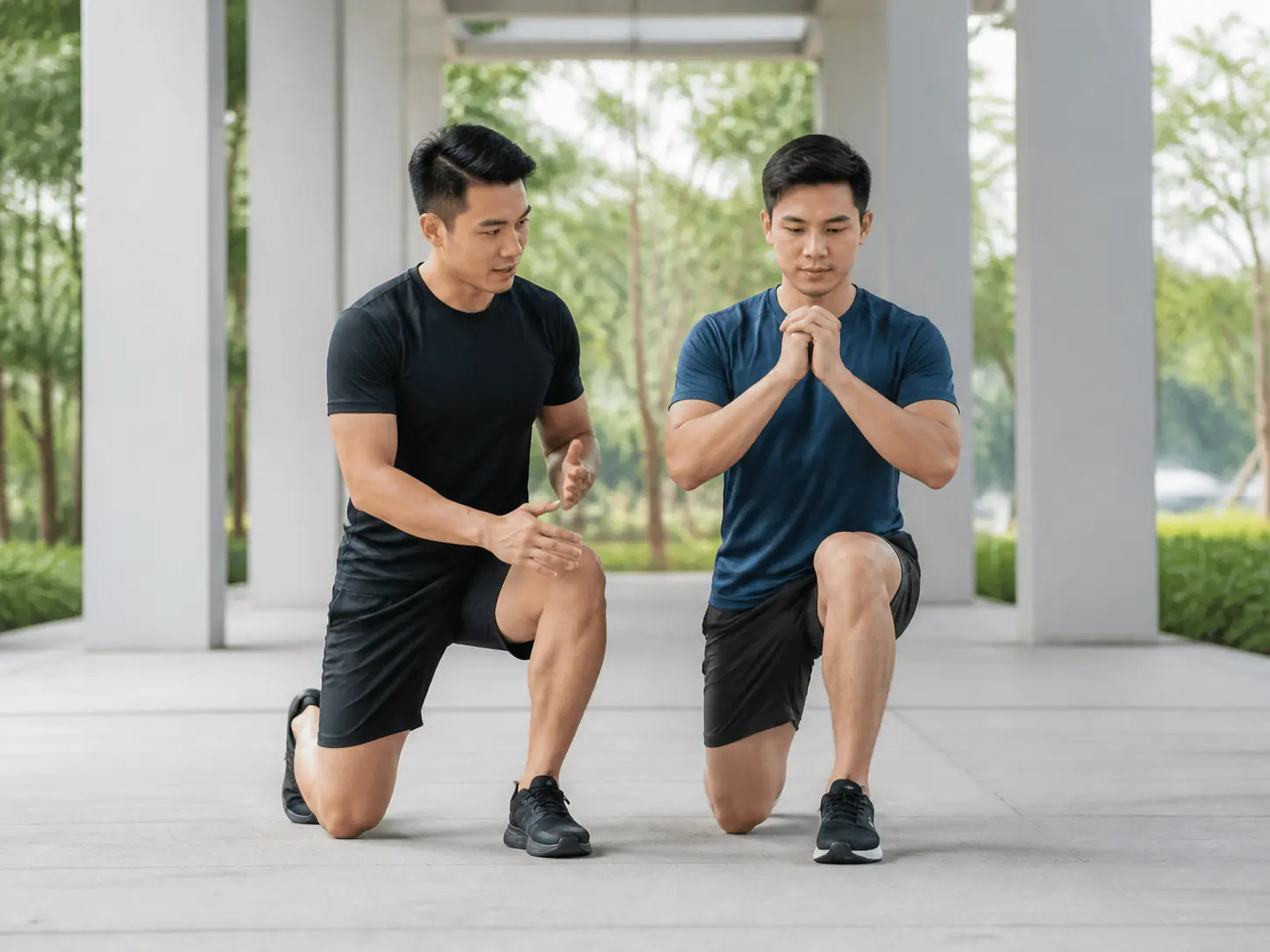
A trainer demonstrating controlled split-squat technique

Where the sled push emphasises driving forward, the sled drag lets you pull, which hits the muscles differently and adds variety to your conditioning. Backward drags especially load the quads while feeling easy on the knees, which many people love.

You need a sled and a strap or handles, so it lives at our Putra Heights centre. Like the push, there is no impact and little soreness, so it is a joint-friendly way to build strong legs and a strong engine.

What it trains and who it suits

Forward drags hit the glutes and hamstrings; backward drags target the quads. Both build leg strength and cardio with no impact. It suits anyone wanting variety in low-impact conditioning.

Backward dragging in particular is often used to build the quads gently, making it valuable for people who want strong legs without heavy knee stress.

Step-by-step cues

  1. Attach a strap or hold the handles connected to the sled
  2. Set your feet and lean against the load
  3. For backward drags, walk back staying low with a slight squat
  4. For forward drags, march forward driving through the legs
  5. Keep the core braced and move at a steady pace

Common mistakes and quick fixes

  • Standing too tall on backward drags, stay low in a slight squat
  • Letting the back round, keep the chest up and core braced
  • Jerky pulling, keep constant, smooth tension on the strap
  • Too heavy to move smoothly, pick a load you can drag steadily

Regressions, progressions and when to stop

Too hard? Reduce the load or distance. Too easy? Add weight, drag further, or speed up. This is a centre exercise; at home, backward walking up a gentle slope offers a milder version of the quad-friendly drag.

  • Stop if you feel sharp knee, hip or back pain rather than effort
  • See a professional if backward walking makes you unsteady or dizzy

Frequently Asked Questions

What is the difference between a push and a drag?+

A push drives the sled forward from behind, emphasising forward drive. A drag pulls it, and backward drags in particular target the quads while being very knee-friendly.

Why do backward drags feel good on the knees?+

The backward motion loads the quads through a range that many people find comfortable, with no impact. It is often used to build knee-friendly leg strength.

Is the sled drag strength or cardio?+

Both, depending on load and pace. Heavier drags build strength; lighter, longer drags build conditioning. Adjusting the weight changes the emphasis easily.

Can I do a similar thing at home?+

Without a sled, walking backward up a gentle incline gives a lighter version of the quad-focused, low-impact effect of a backward drag.

Continue exploring

Programmes

Low-Impact Training

Low-impact training builds strength and fitness without the jumping, pounding and jarring that bother sensitive joints. It suits heavier clients, older adults and anyone with cranky knees, hips or ankles, proving you can get genuinely fit while being kind to your body.

See what it includes →
Programmes

Lower-Body Strength

Lower-body strength training builds your legs, hips and glutes, the biggest muscles you own and the engine behind walking, stairs, sport and standing up. Strong legs make daily life easier, protect your knees and back, and burn plenty of energy in the process.

See what it includes →
Health & Exercise

Low-Impact Options for Sensitive Joints

If your joints are sensitive and your doctor has cleared you, low-impact training builds strength and fitness without the jarring that aggravates sore knees, hips or backs. We coach controlled, joint-friendly options and adjust to how you feel. This is general fitness coaching, not treatment for a joint problem.

Read the suitability guide →
Weight Loss

Strength Plus Cardio for Fat Loss

The best fat-loss plans use both strength and cardio, not one or the other. Strength keeps muscle and shape; cardio and walking add extra calorie burn and heart health. We show you how to combine them without overtraining, so fat drops while your body stays strong.

See the coaching approach →
Goals

Flexibility for Desk Workers

Flexibility for desk workers targets the specific tightness that eight hours in a chair creates, locked-up hips, short hamstrings, a stiff neck and tight chest. We coach a practical routine 1-to-1, plus desk-break habits, so you feel loose and comfortable instead of permanently seized up.

See the coaching approach →
Personal Training

Partner 2-to-1 Training

Partner 2-to-1 training pairs you with someone you know, a spouse, sibling or friend, under one trainer for the session. You split the cost, keep each other accountable, and still get real coaching, with the trainer adjusting each person's weights and exercises to their level.

Compare this option →

Want help applying this guide to your own training?

Private coaching adapts exercise choice, loading and progression to your level, equipment and goal.

Ask a question first Request an assessment time