Skip to content

Exercise technique guide

How to Do Stationary Bike Intervals

Stationary bike intervals alternate hard, fast efforts with easy recovery pedalling. This builds cardio fitness efficiently with almost no joint impact, making it ideal for people who want intensity without pounding their knees. It scales easily and fits any fitness level.
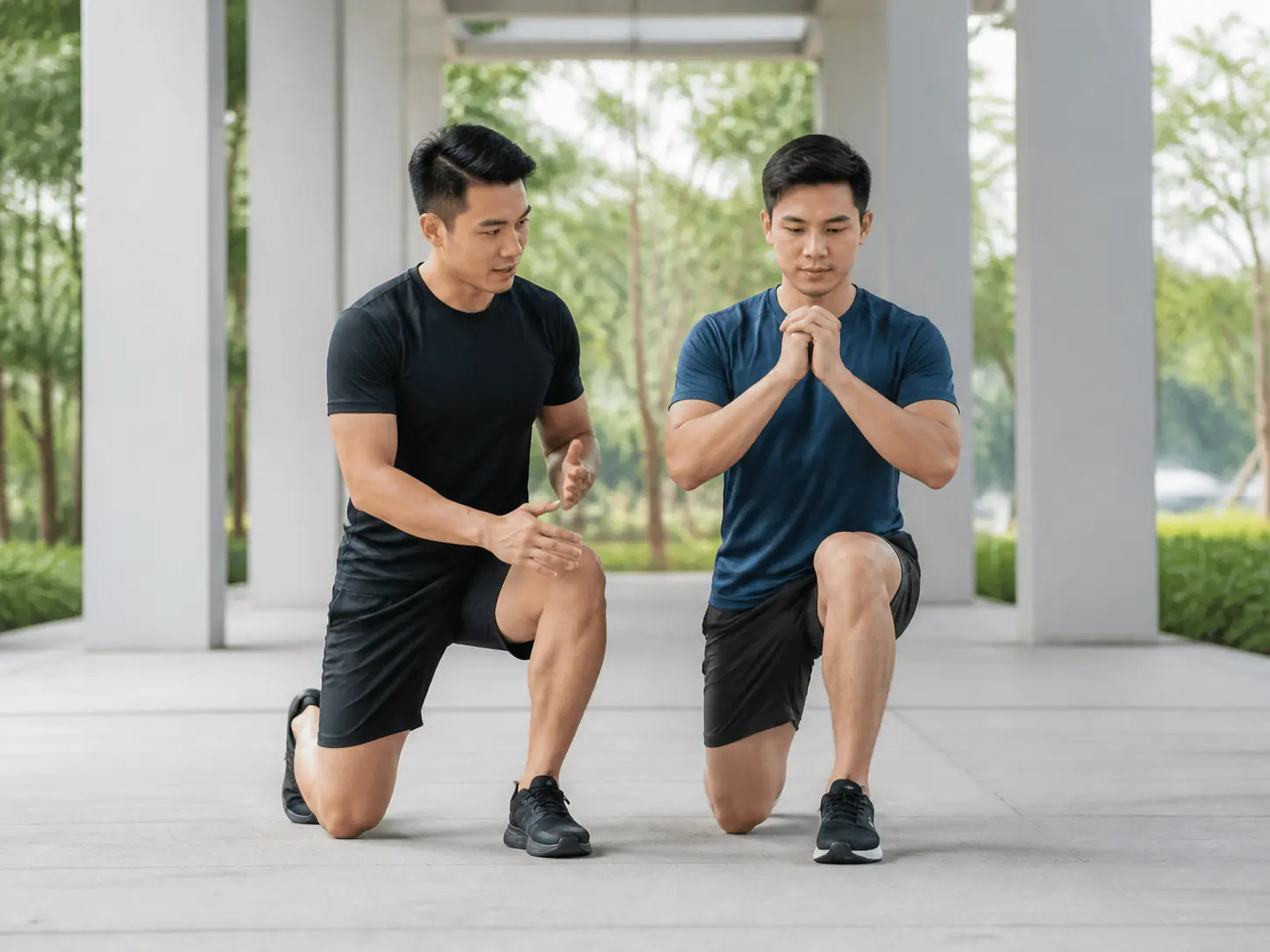
A trainer demonstrating controlled split-squat technique

Intervals get you fitter faster than steady plodding, and the stationary bike is a perfect place to do them. Alternating hard efforts with easy recovery spikes your fitness while the bike keeps almost all impact off your joints.

It needs a stationary bike, so it lives at our Putra Heights centre. It is a smart choice for anyone who wants intense, time-efficient cardio but does not want the joint stress of running or jumping, and it scales to any level.

What it trains and who it suits

It builds cardio fitness and leg endurance efficiently, with minimal joint impact. It suits busy people short on time, those with cranky knees, and anyone wanting intense cardio without high impact.

Because you control the resistance and effort, it scales from gentle intervals to all-out sprints, working for beginners and fit athletes alike.

How to structure it

  • Warm up with a few minutes of easy pedalling
  • Ride hard for a set time, such as thirty seconds
  • Recover with easy pedalling for a minute or two
  • Repeat for several rounds based on your fitness
  • Cool down with a few minutes of easy spinning

Common mistakes and quick fixes

  • No resistance on hard efforts, add enough to make sprints count
  • Skipping recovery, easy pedalling between efforts is essential
  • Poor seat height, set it so your knee is slightly bent at the bottom
  • Going all-out too early, build intensity across the session

Adjusting, progressing and when to stop

Easier? Do fewer, shorter, gentler intervals with longer recovery. Harder? Add rounds, increase resistance, or shorten recovery. This lives at our centre; outdoor cycling gives a similar low-impact interval option.

  • Stop if you feel sharp knee or chest pain rather than hard breathing
  • See a professional if you get chest pain or severe dizziness during efforts

Frequently Asked Questions

Why do intervals instead of steady cycling?+

Intervals build fitness efficiently in less time by pushing your heart and legs hard, then recovering. They are a time-smart way to get fitter, especially for busy people.

Are bike intervals easy on the joints?+

Yes. The bike supports your bodyweight and there is no impact, so you can work very hard without the knee and hip stress of running or jumping.

How should I set up the bike?+

Set the seat so your knee is only slightly bent at the bottom of the pedal stroke. A seat too low or high can bother the knees, so adjust it before you start.

How many intervals should I do?+

Beginners might start with four to six short efforts with generous recovery. Build the number, intensity, or resistance gradually as your fitness improves.

Continue exploring

Programmes

HIIT Conditioning

HIIT conditioning uses short bursts of hard effort with recovery in between to build fitness fast and burn plenty of energy in little time. Coached properly and scaled to your level, it is efficient and effective, ideal for busy people, as long as it is not overdone.

See what it includes →
Programmes

Resistance-Band Training

Resistance-band training uses elastic bands to build strength and muscle with almost no equipment or space. Bands are portable, joint-friendly and surprisingly effective, making them ideal for home and condo training, travel, and anyone who wants results without a rack of weights.

See what it includes →
Health & Exercise

Low-Impact Options for Sensitive Joints

If your joints are sensitive and your doctor has cleared you, low-impact training builds strength and fitness without the jarring that aggravates sore knees, hips or backs. We coach controlled, joint-friendly options and adjust to how you feel. This is general fitness coaching, not treatment for a joint problem.

Read the suitability guide →
Guides & Tools

HIIT vs Steady-State Cardio

HIIT alternates hard bursts with recovery and is time-efficient but tiring. Steady-state cardio is a continuous, easier effort that is gentler and easy to repeat. Neither wins outright: HIIT saves time, steady-state builds an aerobic base. For Many people, a mix of both works best.

Read the guide →
Weight Loss

Muscle Building for Women

Muscle building for women creates the toned, shapely look most want, not bulk. Women lack the hormones to gain size easily, so lifting simply firms and shapes the body, strengthens bones and raises metabolism. It is the missing piece behind the "toned" look people chase with cardio.

See the coaching approach →
Goals

Gain Weight Healthily

Gaining weight healthily means adding mostly muscle rather than just fat, by eating in a controlled surplus and training for strength. We coach naturally lean, hard-gainer clients 1-to-1 to fill out their frame, get stronger and feel more confident, without turning it into junk-food bulk.

See the coaching approach →

Want help applying this guide to your own training?

Private coaching adapts exercise choice, loading and progression to your level, equipment and goal.

Ask a question first Request an assessment time