Skip to content

Exercise technique guide

How to Do a Superman Hold

The superman hold has you lie face down and lift your arms, chest and legs off the floor. It strengthens the muscles along your back and glutes, balancing out all the front-focused core work Many people do. Simple and equipment-free, it supports a strong, resilient back.
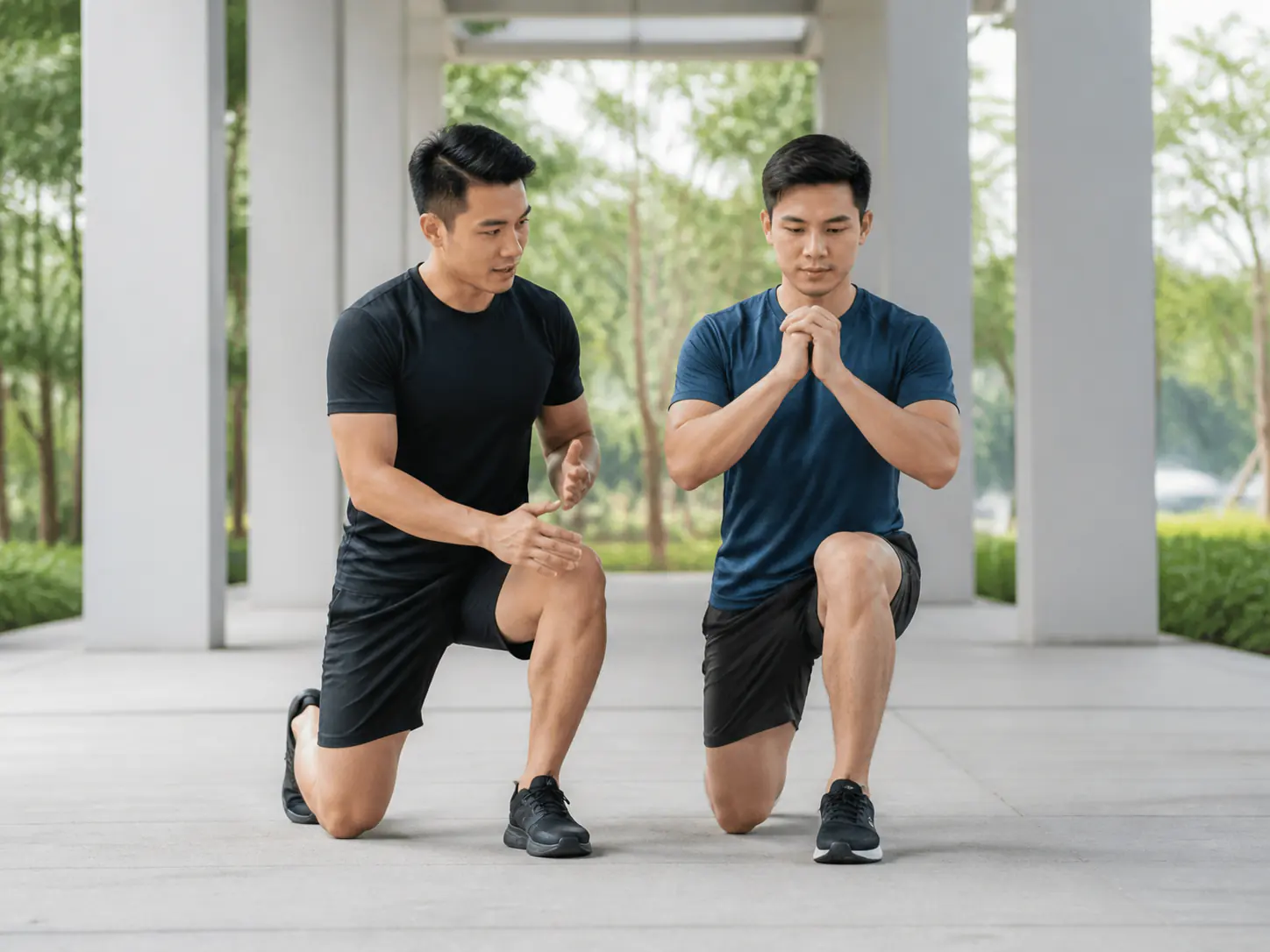
A trainer demonstrating controlled split-squat technique

Most core training hits the front of the body, leaving the back of the core under-trained. The superman hold fixes that: lying face down and lifting your arms, chest and legs strengthens the muscles that run along your spine and support a resilient back.

You need only floor space, so it fits any home or our Putra Heights centre. It is a simple, gentle counterbalance to all the planks and crunches, helping keep your core strong and balanced front to back.

What it trains and who it suits

It strengthens the muscles along the spine and the glutes, balancing front-focused core work. It suits anyone wanting a stronger back, desk workers, and people rounding out their core training.

Because it is gentle and equipment-free, it is easy to include and helps counter the forward-hunched posture of daily life.

Step-by-step cues

  1. Lie face down with arms reaching in front of you
  2. Gently lift your arms, chest and legs off the floor
  3. Squeeze your glutes and the muscles along your back
  4. Keep your neck neutral, gaze toward the floor
  5. Hold briefly, then lower with control and repeat

Common mistakes and quick fixes

  • Cranking the neck up, keep it neutral, eyes down
  • Lifting too high and straining, a small, controlled lift is enough
  • Holding the breath, breathe steadily through the hold
  • Jerking up and down, move smoothly and with control

Regressions, progressions and when to stop

Too hard? Lift only the arms, or only the legs, at first. Too easy? Hold longer, or add small controlled reps. At home the floor is all you need; at our centre we combine it with other back and core exercises for balance.

  • Stop if you feel sharp low-back pain rather than muscles working
  • See a professional if extending your back triggers pain down the leg

Frequently Asked Questions

What does the superman hold work?+

It strengthens the muscles running along your spine and your glutes, which balance out the front-focused core work like planks and crunches, supporting a stronger, more resilient back.

Is it safe for my lower back?+

Done with a small, controlled lift and a neutral neck, it is usually a gentle, back-strengthening exercise. If lifting up triggers sharp back pain, stop and see a professional.

How high should I lift?+

Only a small, comfortable amount. You do not need to lift high; a controlled lift that engages the back and glutes is enough and keeps the movement safe.

How long should I hold it?+

Try holds of a few seconds to around fifteen seconds, or small controlled reps, for a few rounds. Control matters far more than lifting high or holding a long time.

Continue exploring

Programmes

Core Training

Core training builds the deep trunk muscles that stabilise your spine, protect your back and transfer force between your upper and lower body. It is about a strong, functional midsection that supports everything you do, not just chasing visible abs with endless crunches.

See what it includes →
Fitness in Malaysia

Futsal Nights and Fitness

Weekly futsal is fun and social, but going from a sedentary week to all-out sprinting and turning is how players pull hamstrings and roll ankles. A little conditioning and strength work builds the speed and durability the game needs, so you play well and stay off the injury list.

Read the guide →
Programmes

Lower-Body Strength

Lower-body strength training builds your legs, hips and glutes, the biggest muscles you own and the engine behind walking, stairs, sport and standing up. Strong legs make daily life easier, protect your knees and back, and burn plenty of energy in the process.

See what it includes →
Guides & Tools

Strength Training For Runners

Strength training helps runners by building stronger, more resilient muscles that improve running economy and reduce injury risk. It does not make you bulky or slow; done sensibly it complements running. A little regular strength work, focused on the legs and core, benefits runners of all levels.

Read the guide →
Guides & Tools

Zone 2 Cardio Explained

Zone 2 cardio is steady exercise at an easy pace where you can still hold a conversation. It builds your aerobic base, improves how well your heart and muscles use oxygen, and is gentle enough to do often. Many people go too hard and miss its main benefit: sustainability.

Read the guide →
Goals

Build Gym Confidence

Building gym confidence means learning what to do, how to use the equipment, and how to train with good form until the gym stops feeling intimidating. We teach it privately 1-to-1 in a judgement-free setting, so you go from anxious and lost to comfortable and self-assured.

See the coaching approach →

Want help applying this guide to your own training?

Private coaching adapts exercise choice, loading and progression to your level, equipment and goal.

Ask a question first Request an assessment time