Skip to content

Exercise suitability guide

Returning to Exercise After Hospitalisation in KL & Selangor

After a hospital stay, returning to exercise needs clear medical clearance and a very gentle start. With your doctor's go-ahead, we rebuild strength and stamina step by step, following any limits they set. This is coaching, not rehabilitation or medical care, we work alongside your medical team, never instead of them.
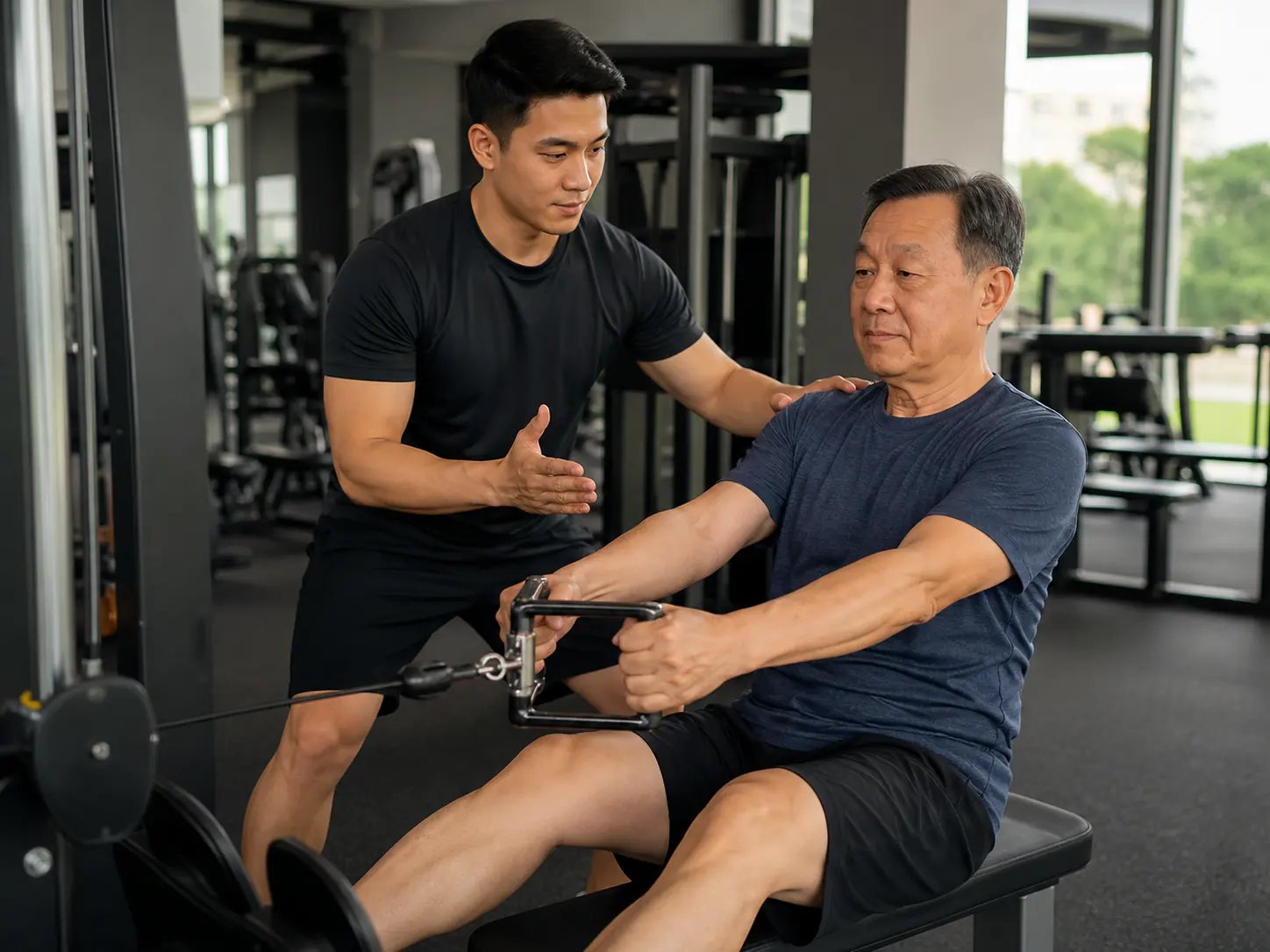
An older adult completing a supervised cable-row exercise

A hospital stay, even a short one, takes a real toll, time in bed saps strength and stamina surprisingly fast, and everyday things can feel harder than they used to. Rebuilding is very doable, but it has to start gently and it has to start with your doctor's clearance. This is not the moment to test yourself.

We coach general fitness, not clinical rehabilitation. If you have been referred to physiotherapy or a hospital rehab programme, that comes first and we work alongside it, never in place of it. Once your doctor has cleared you for general exercise, we rebuild carefully within whatever limits and guidance they have set.

Rebuilding from a very gentle base

We start with the basics, moving comfortably, standing and sitting with control, short walks, before any structured strength work. After time in a hospital bed, even gentle activity is progress, and we treat it that way rather than rushing toward old routines.

From there we add small, steady increases as your strength and energy return, always watching how you recover between sessions. The pace is set by your body and your doctor's guidance, not by impatience.

How we keep the return safe

  • Only start once your doctor has cleared general exercise
  • Work alongside any physio or hospital rehab, never instead of it
  • Begin with gentle movement and short efforts
  • Follow every restriction your medical team set
  • Progress slowly, guided by recovery between sessions

Red flags, stop and get review

  • Any symptom related to why you were hospitalised
  • Chest pain, palpitations, or unusual breathlessness
  • Dizziness, fainting, or sudden severe weakness
  • Pain, swelling or problems around a surgical site or wound
  • Anything your doctor or hospital team told you to watch for, contact them

Working alongside your medical team

Your doctor and any hospital rehab or physio team lead your recovery. We do not diagnose, treat or replace them, and we never override their advice. We coach general fitness once you are cleared, staying strictly within their limits and referring you straight back if anything gives us pause.

Frequently Asked Questions

When can I start exercising after hospital?+

Only once your doctor has cleared you for general exercise, and after any prescribed physio or rehab. We then start very gently and rebuild step by step, always within the limits your medical team set.

Is this the same as rehabilitation?+

No. Clinical rehabilitation is medical care led by physios and doctors. We coach general fitness alongside that, once you are cleared. If you still need rehab, that comes first and we complement it, never replace it.

I feel much weaker than before, is that normal?+

Yes, time in a hospital bed drains strength and stamina quickly. It is very rebuildable. We start where you are now, treat gentle activity as real progress, and add load only as you recover.

What if I had surgery?+

Follow your surgeon's and doctor's guidance closely, including any restrictions around the surgical site. We only train within their clearance and limits, and stop immediately at any sign of a problem around a wound or incision.

Continue exploring

Assessments

Fitness vs Clinical Assessment

A fitness assessment sets a safe starting point for training, mapping strength, stamina and movement. A clinical assessment diagnoses injuries and medical conditions, and only qualified healthcare professionals do that. We do the first, never the second, and refer you on the moment something needs a doctor or physio.

See how it works →
Assessments

Beginner Fitness Assessment

A beginner fitness assessment is a gentle first session where we map where you are starting from, movement, strength, stamina and goals. No fitness is needed to take it. It sets a safe, realistic starting point, not a diagnosis, and turns "I don't know where to begin" into a clear first plan.

See how it works →
Why KinesioFitness

Working With Your Doctor or Physio

If you are under a doctor or physiotherapist, we train alongside them, not against them. With your permission we respect their restrictions, build a plan that supports their treatment, and stay in our lane as coaches. This teamwork is how people with conditions or past injuries train safely and well.

Compare this option →
Guides & Tools

Exercise And Blood Sugar Basics

In general, regular exercise helps the body use blood sugar and supports overall metabolic health. Both cardio and strength training play a role. This is general education, not medical advice. If you have diabetes, blood sugar concerns, or take any medication, speak to your doctor before changing your routine.

Read the guide →
Guides & Tools

Returning To Exercise After Illness

After illness, ease back into exercise gradually rather than jumping straight to your previous level. Start light, listen to your body, and build up over days or weeks. Rushing back can set you back further. For any significant illness, or if unsure, get medical clearance before returning to training.

Read the guide →
Personal Training

Trainer-Provided Equipment

You do not have to own any equipment to train at home. We bring the dumbbells, bands, mat and tools your session needs, coach the workout, then take everything away. All you provide is a bit of clear floor space and yourself, ready to work.

Compare this option →

Not sure whether exercise is suitable for your situation?

Share your situation, any medical clearance and your training goal. We will explain the fitness scope and when referral is needed.

Ask about exercise suitability Request an assessment time