Skip to content

Coaching for your starting point

Grip Strength Training for Older Adults in KL & Selangor

Grip strength for older adults powers everyday tasks like opening jars, carrying bags and holding rails, and it is a recognised marker of overall health. A trainer builds hand and forearm strength alongside full-body work, at our centre or your home.
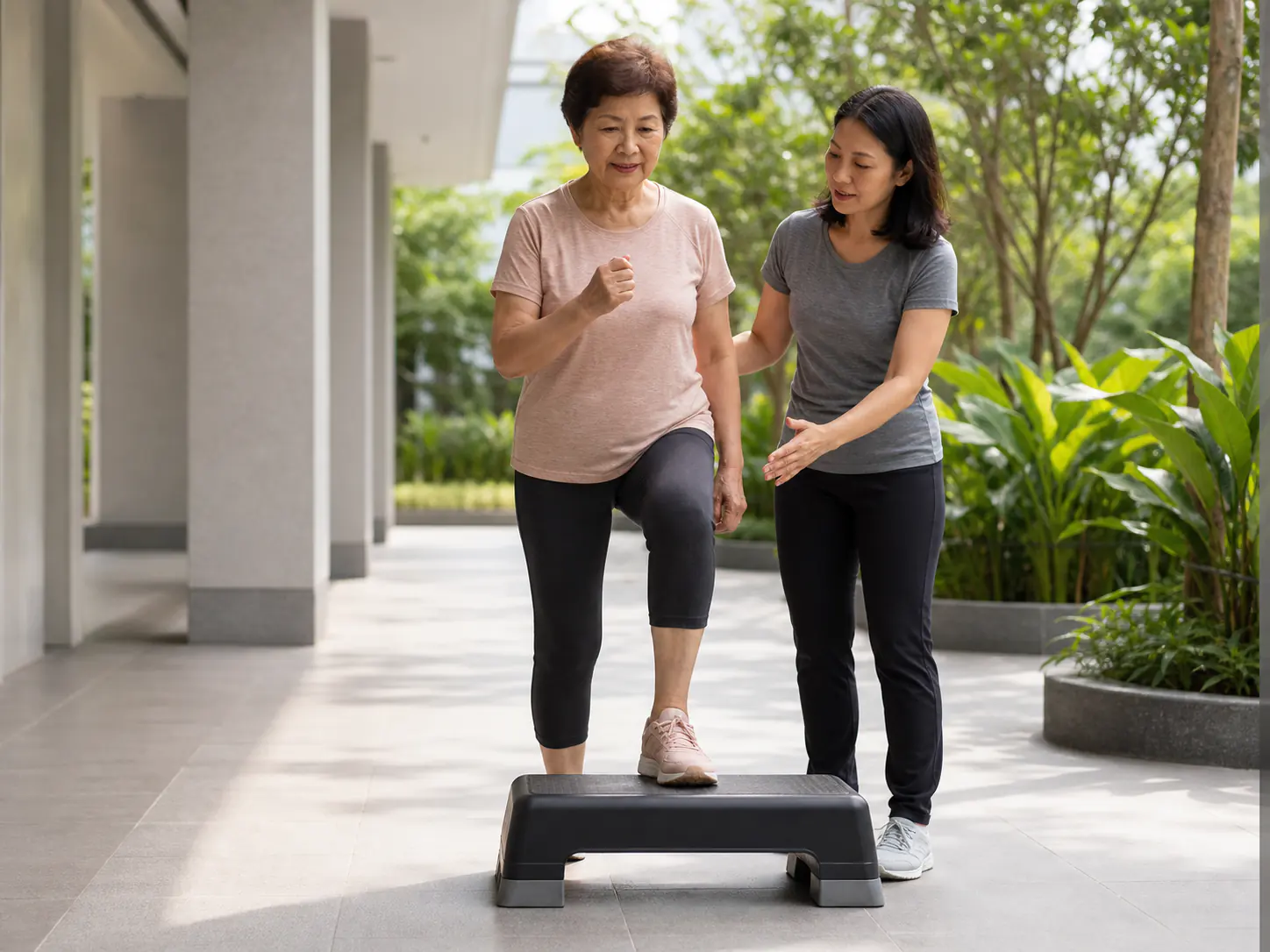
An older adult completing a supervised low step-up

Grip strength sounds like a small thing until you notice how often you rely on it, opening a jar, carrying shopping, gripping a handrail on the LRT, wringing out a cloth, holding a grandchild's hand in a crowd. When it fades, all of these get harder, and quietly frustrating. Weak hands are one of the most common and underestimated ways daily independence slips in later life.

There is more to it, too. Grip strength is one of the best simple indicators of overall strength and healthy ageing that researchers have found, a strong grip tends to go with a stronger, more resilient body overall. We build it directly, with practical hand and forearm work, but always as part of full-body strength training, because a strong grip on a weak body only gets you so far.

Why grip matters more than it seems

Your hands are the connection between your body and almost every daily task, from carrying to holding on for balance. Weak grip makes ordinary jobs harder and can even undermine safety when you need to grab a rail. It is also a well-known marker of overall strength, which is why it is worth training deliberately.

How we build grip strength

  • Carrying and holding loads to build honest grip
  • Hand and forearm work for opening and gripping
  • Pulling movements that strengthen the whole grip chain
  • Practical tasks that mirror jars, bags and rails

Grip as part of full-body strength

We never train grip in isolation, because strong hands on a weak body miss the point. Grip work sits inside a broader plan that builds your legs, back and core too, so your whole body gets stronger together. The grip gains then support everything else, from carrying to catching yourself if you stumble.

Building stronger, more capable hands

  1. Assess your current grip and where it limits you
  2. Add carrying and holding work to build real strength
  3. Include hand and forearm strengthening
  4. Tie it into full-body strength training
  5. Notice jars, bags and rails becoming easier

Background guidance

This page is written to align with the general public-health guidance below. These sources do not endorse KinesioFitness, and this page is not medical advice.

How we create and check content →

Frequently Asked Questions

Why does my grip feel so much weaker now?+

Grip strength declines with age and inactivity like any other strength, and it is often one of the first things people notice. The good news is it responds quickly to training, and improvements usually show up in daily tasks fast.

Is grip strength really linked to overall health?+

Researchers have found grip strength to be a useful simple marker of overall strength and healthy ageing. A strong grip tends to reflect a stronger, more resilient body, which is one reason we train it deliberately.

Can stronger grip help with opening jars and carrying?+

Directly, yes. Those are exactly the everyday tasks grip training improves. Most older adults notice jars, bags and bottles becoming noticeably easier to manage within a few weeks of consistent work.

Do you only train my hands?+

No. We build grip as part of full-body strength training, because strong hands work best on a strong body. Grip work supports carrying, balance and daily tasks alongside your overall strength.

Continue exploring

Assessments

Sit-to-Stand Test

The sit-to-stand test counts how many times you can rise from a chair and sit back down in 30 seconds, or times five rises. It reflects leg strength and everyday function, especially for older adults. It is a simple fitness marker we track and improve, not a diagnostic medical test.

See how it works →
Assessments

Grip Strength Test

A grip strength test measures how hard you can squeeze, usually with a hand dynamometer. Grip is a surprisingly good marker of overall strength and healthy ageing. We track it as a simple, motivating fitness signal, not as a medical diagnosis, and we build it through your training over time.

See how it works →
Why KinesioFitness

Our Referral Network

Good coaching includes knowing who to send you to. When something falls outside fitness, an injury, a diagnosis, medical nutrition, we point you to trusted physiotherapists, doctors and other professionals, and happily work alongside them. A trainer with a referral network is a safer trainer.

Compare this option →
Where We Train

Personal Trainer for Seniors in Klang

Personal training for older adults in Klang, strength and balance for independent ageing, trained gently and safely after any needed clearance.

Check this area →
Where We Train

Personal Trainer for Seniors in KLCC

Personal training for older adults in KLCC, strength and balance for independent ageing, trained gently and safely after any needed clearance.

Check this area →
Guides & Tools

Grip Strength And Longevity

Grip strength is more than a party trick; it is linked to overall strength and healthy ageing, often reflecting your general physical robustness. You build it through everyday training like carries, rows and holding weights. A strong grip supports daily tasks and is a handy marker of your overall fitness.

Read the guide →

Want to know whether this training suits you?

Tell us your starting point, goal and what makes consistency difficult. We will explain the realistic options.

Ask whether this suits me Request an assessment time