Skip to content

Sport-specific coaching

Dance Fitness Conditioning in KL & Selangor

Dance conditioning builds the strength, control and joint resilience that dance classes alone rarely develop, protecting ankles, knees and backs while improving your control, jumps and stamina. It is cross-training that makes you a stronger, more durable dancer.
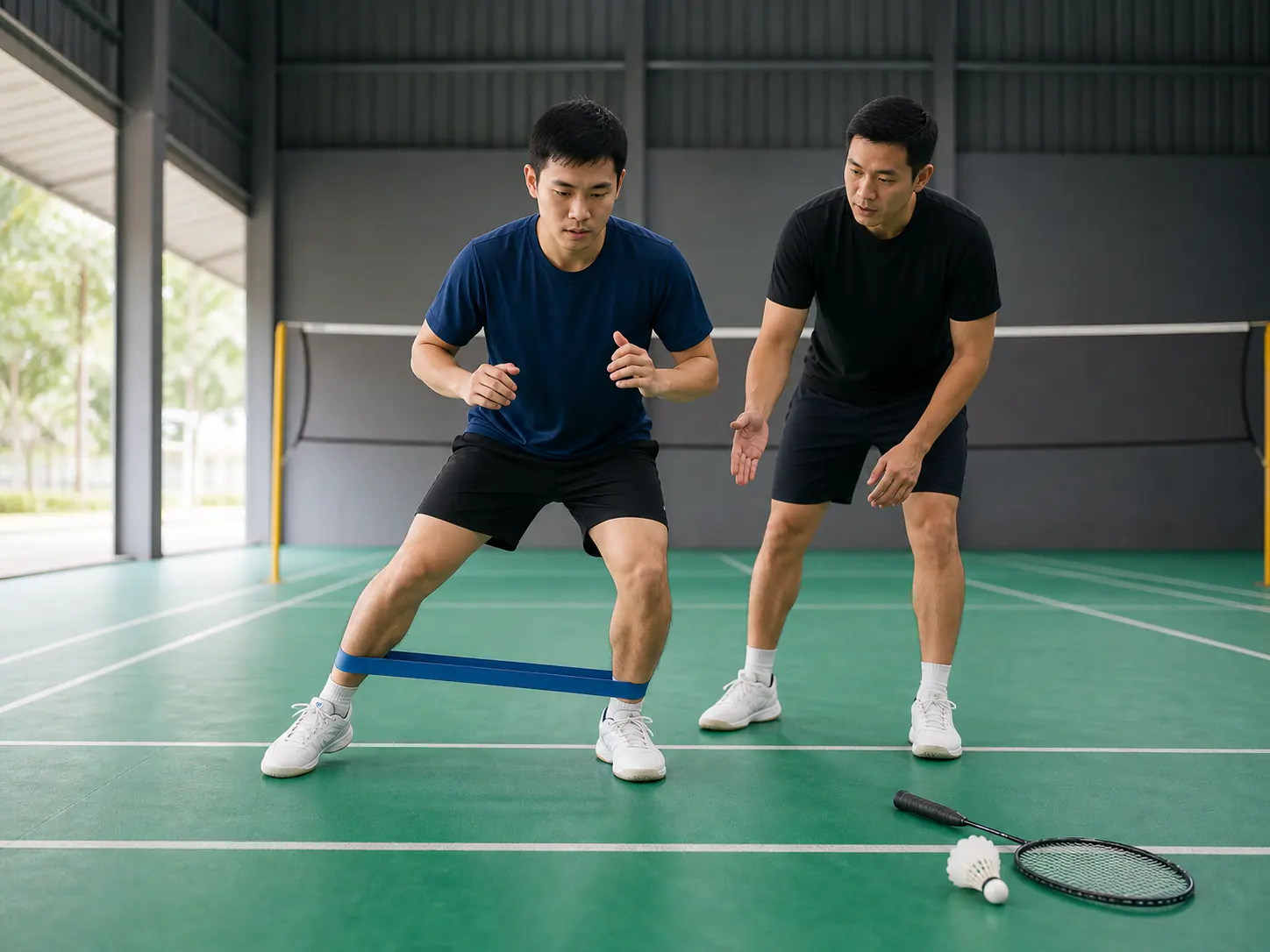
Badminton conditioning with a lateral resistance-band exercise

Dance builds grace, rhythm and cardio, but it rarely builds the raw strength and joint control that keep dancers healthy. Ankles roll, knees ache, and lower backs complain because the supporting strength was never trained. Whether you do Zumba, K-pop, hip-hop, contemporary or Latin, targeted conditioning fills the gaps class alone leaves.

We are your cross-training. The goal is a dancer who moves better and breaks down less, stronger legs for jumps and landings, better control for balance and turns, and the ankle and core resilience that keeps you dancing week after week without niggles. Better conditioning also means more stamina to finish routines strong.

Why dancers get injured and plateau

Dance loads the same movements repeatedly, often at the edge of your control, but the supporting strength is rarely trained directly. Weak ankles roll on landings, weak glutes let knees cave, and a soft core lets the lower back take the strain. These gaps cause both injuries and plateaus, because control needs strength underneath it.

Conditioning targets exactly those weak links so your body can express what your dancing is trying to do.

What we assess before you start

  • Ankle strength and stability for jumps and landings
  • Glute and single-leg control for balance and turns
  • Core strength that protects the lower back
  • Jump power and how softly you land
  • Any recurring ankle, knee or back issues to manage

Strength, stamina and mobility focus

Strength develops the ankles, glutes, legs and core that dance demands but rarely trains, improving control and protecting joints. Stamina work supports finishing routines strong. Mobility keeps hips, ankles and the spine moving through the ranges your style needs, safely and with control.

It slots around your classes, dance builds skill and artistry, conditioning builds the durable, controlled body that performs it.

A sample weekly plan

  1. Two conditioning sessions on non-intense dance days
  2. Ankle and single-leg strength early in each session
  3. Core and glute work for control and back protection
  4. Jump and landing drills to build soft, strong landings
  5. Mobility to maintain the range your style demands

Frequently Asked Questions

My ankles keep rolling in class. Can that be fixed?+

Usually yes. Weak ankles and poor single-leg control are very trainable, and targeted work builds real stability within weeks. If an ankle is unstable after a bad sprain, get it assessed medically first.

Will strength training make me stiff or bulky?+

No. Done for dancers, it improves control and mobility rather than reducing it, and does not build bulk. You get stronger, land softer and move with more control, not less.

I already dance several times a week. Do I need more?+

Dance builds skill and cardio but rarely the supporting strength that prevents injury. Two short conditioning sessions usually make dancing feel better and reduce the niggles that interrupt training.

My lower back aches after routines. Why?+

Often a weak core lets the back overwork during turns and extensions. Core strengthening typically helps a lot. If the pain is sharp or radiates down a leg, we refer you to a physio first.

Continue exploring

Programmes

Low-Impact Training

Low-impact training builds strength and fitness without the jumping, pounding and jarring that bother sensitive joints. It suits heavier clients, older adults and anyone with cranky knees, hips or ankles, proving you can get genuinely fit while being kind to your body.

See what it includes →
Programmes

Weight-Loss Training

Weight-loss training combines strength work, sensible conditioning and realistic food habits so you lose fat while keeping the muscle that keeps you toned. No crash diets, no punishing cardio, just a sustainable plan built around your body, your schedule and Malaysian food.

See what it includes →
Goals

Recreational Sport Performance

Recreational sport performance training builds the strength, conditioning and resilience that make you better and more durable at the sport you love, futsal, badminton, tennis, running, hiking. We coach it 1-to-1 to complement your game, so you play harder and break down less.

See the coaching approach →
Goals

Improve Balance

Improving balance means training the strength, ankle control and quick reactions that keep you steady on your feet. We coach it progressively 1-to-1 so stairs, uneven pavements, wet floors and one-legged moments stop feeling risky, a foundation for confidence at any age.

See the coaching approach →
Weight Loss

Weight Loss After 50

Weight loss after 50 is really about protecting muscle and bone while losing fat. We use gentle, controlled strength training, enough protein and daily walking to reshape your body without crash diets, improving how you move, your balance and your health, not just the number on the scale.

See the coaching approach →
Weight Loss

Weight-Loss Training for Men

Weight-loss training for men focuses on dropping the gut while keeping and building muscle, so you end up leaner and stronger rather than just lighter. We use simple strength work, honest food coaching and a plan that survives long work hours, teh tarik and weekend mamak.

See the coaching approach →

Ready for a more structured way to train?

Start with an assessment so we understand your level, goal, schedule and preferred training location.

The request opens WhatsApp; a time is confirmed only after we reply and agree it with you.

Request an assessment time Ask a question first