Skip to content

Sport-specific coaching

Grip & Forearm Training for Racquet Sports in KL & Selangor

Grip and forearm training builds the strength and endurance racquet players need for control and power, while addressing the elbow overload behind tennis and golfer's elbow. We strengthen the forearm and grip in a balanced way so you hold your racquet firmer for longer without the nagging elbow pain.
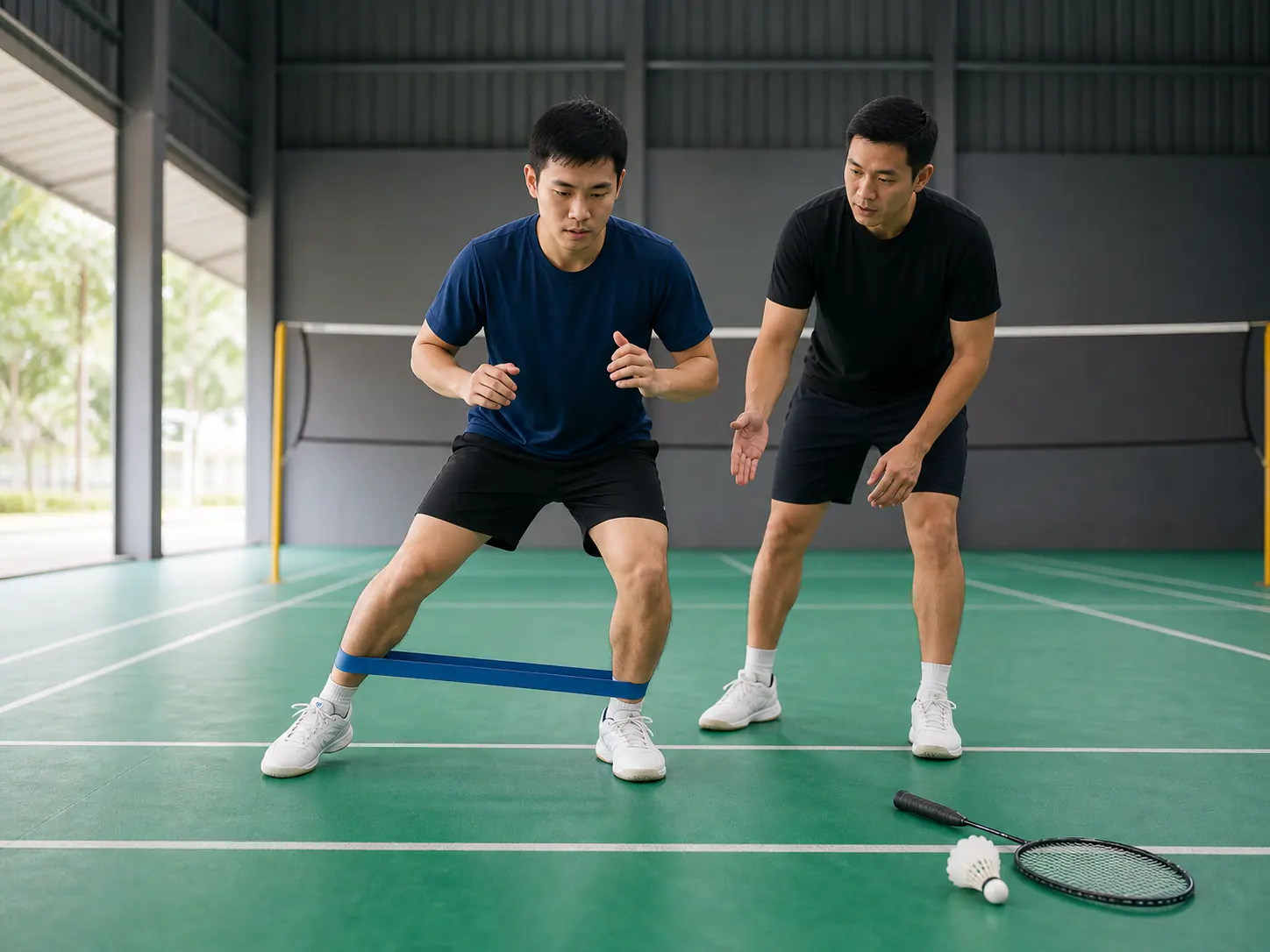
Badminton conditioning with a lateral resistance-band exercise

Racquet sports live and die by the grip and forearm, yet almost no recreational player trains them. A stronger grip means better racquet control and more power transfer, and forearm endurance means your shots stay crisp deep into a match. But the same repetitive load, done with an unprepared or imbalanced forearm, is exactly what causes the tennis and golfer's elbow that plague so many badminton, tennis and squash players.

We build the forearm and grip in a balanced, progressive way: strength and endurance for better control and power, and targeted work on both sides of the forearm to address and prevent the elbow overload behind those stubborn conditions. Whether you play badminton in a Subang hall or tennis at your club, stronger, more balanced forearms mean a better game and healthier elbows.

Why grip and forearm matter so much

The grip is your only connection to the racquet, so grip strength directly affects control and how much power you can transfer into a shot. Forearm endurance keeps that grip firm and your shots precise across a long match rather than fading. Yet most players never train either directly, relying on play alone.

The flip side is elbow health. Tennis and golfer's elbow come from repetitive forearm overload, often with an imbalance between the muscles on each side. Balanced forearm strengthening both improves your game and addresses the root of those common elbow problems.

What we assess and build

  • Grip strength for racquet control and power transfer
  • Forearm endurance to keep shots crisp all match
  • Balanced strengthening of both sides of the forearm
  • Elbow-friendly progression to address overload

A sample training progression

  1. Weeks 1-2: assess grip and forearm balance, build a base
  2. Weeks 3-4: add progressive grip and forearm strength work
  3. Weeks 5-6: develop endurance and address any imbalance
  4. Weeks 7-8: integrate the work around your racquet-sport play

Common mistakes and home alternatives

Players only ever play, then develop elbow pain and rest without fixing the cause, so it returns. Others train one side of the forearm only. At home, wrist curls and extensions, grip work with a towel or gripper, and balanced forearm exercises build strength and address elbow overload.

Frequently Asked Questions

Can this help my tennis or golfer's elbow?+

Often, yes. These conditions come from repetitive forearm overload, frequently with an imbalance between the forearm muscles. Balanced, progressive strengthening addresses the root cause. But acute, severe or persistent elbow pain should be assessed by a professional first.

Will a stronger grip improve my game?+

Yes. A firmer grip gives you better racquet control and transfers more power into your shots, and forearm endurance keeps your shots precise deep into a match instead of fading as your grip tires.

How is this different from just squeezing a gripper?+

A gripper trains one part of grip strength but ignores forearm balance and endurance, and can even worsen an elbow imbalance. We build the grip and both sides of the forearm in a balanced, elbow-friendly way.

When should I see a professional?+

Elbow pain that is sharp, severe, or persistent despite rest, or that stops you playing, should be assessed by a physio or doctor. We build grip and forearm strength around cleared, stable issues.

Continue exploring

Programmes

Senior Strength Programme

A senior strength programme rebuilds the muscle we naturally lose with age, using safe, progressive resistance work. Stronger legs and grip mean standing up easily, climbing stairs and carrying shopping without help, the strength that keeps you independent for years longer.

See what it includes →
Programmes

Low-Impact Training

Low-impact training builds strength and fitness without the jumping, pounding and jarring that bother sensitive joints. It suits heavier clients, older adults and anyone with cranky knees, hips or ankles, proving you can get genuinely fit while being kind to your body.

See what it includes →
Weight Loss

Weight-Loss Training for Women

Weight-loss training for women uses strength work to drop fat while keeping, not shrinking, the shape you want. It sidesteps the crash-diet cycle, respects your energy and cycle, and builds strength that carries into daily life. No bulking, no starving, a supportive setting.

See the coaching approach →
Exercise Library

Chair Sit-to-Stand

The chair sit-to-stand has you stand up from a chair and sit back down under control, ideally without using your hands. It builds the leg strength behind everyday independence, is very safe, and is one of the best starting exercises for older adults and beginners.

Learn the technique →
Exercise Library

Dead Hang

The dead hang has you simply hang from a bar with straight arms. It builds grip strength, stretches the shoulders and lats, and can feel relieving for the spine. It is also the first step toward pull-ups, teaching your hands and shoulders to hold your bodyweight.

Learn the technique →
Weight Loss

Keeping Weight Off

Many people can lose weight; far fewer keep it off, because they treat the diet as temporary. Keeping weight off means building habits you can hold for life, regular strength training, enough protein and daily movement, and shifting from a short diet to a lasting way of living.

See the coaching approach →

Ready for a more structured way to train?

Start with an assessment so we understand your level, goal, schedule and preferred training location.

The request opens WhatsApp; a time is confirmed only after we reply and agree it with you.

Request an assessment time Ask a question first