Skip to content

Sport-specific coaching

Jump & Landing Training in KL & Selangor

Jump and landing training builds both explosive jump height and the controlled landing that protects your knees. Useful for basketball, volleyball, netball and any jumping sport, we develop the power to jump higher and the mechanics to land safely, reducing ACL and knee injury risk.
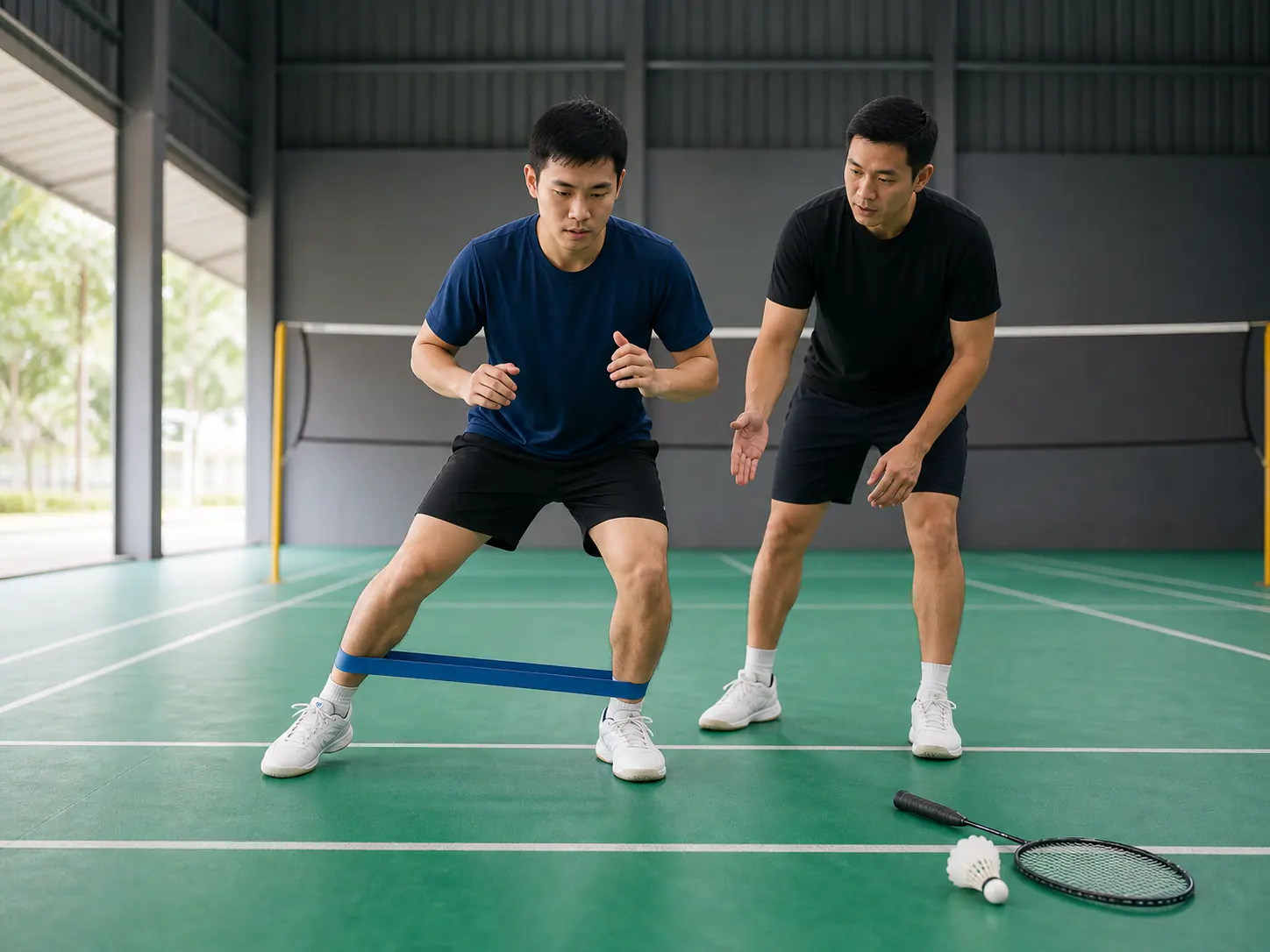
Badminton conditioning with a lateral resistance-band exercise

Everyone wants to jump higher, but few realise that how you land matters just as much, or more. Every jump ends in a landing, and poor landing mechanics are one of the biggest risk factors for ACL tears and knee injuries, especially in sports with jumping under pressure. Training the jump without training the landing builds power on a fragile foundation, which is a recipe for getting hurt.

We build both sides together: the explosive power and technique to jump higher for your sport, and the controlled, aligned landing that absorbs force safely and protects your knees. This combination makes you a more effective jumper and dramatically lowers your injury risk. Whether you play basketball, volleyball, netball or any jumping sport, jumping high and landing safe should always be trained as one skill.

Why landing matters as much as jumping

A jump generates force; a landing has to absorb it, often several times your body weight, sometimes on one leg and off-balance. When landing mechanics are poor, the knee is exposed to the forces that tear the ACL, which is why landing technique is central to every serious injury-prevention program. You cannot separate jumping higher from landing safely.

Training both develops power and protection together. You jump better and land in a way that keeps you on the court instead of on crutches.

What we assess and build

  • Explosive power and technique to jump higher
  • Controlled, aligned landing to absorb force safely
  • Single-leg strength and control for one-legged landings
  • Knee and hip alignment to reduce ACL injury risk

A sample training progression

  1. Weeks 1-2: build single-leg strength and basic landing control
  2. Weeks 3-4: add jump technique and two-foot landing work
  3. Weeks 5-6: progress to single-leg and reactive landings
  4. Weeks 7-8: sport-specific jumping and landing at full effort

Common mistakes and home alternatives

Athletes chase jump height with no landing training, then land stiff or knock-kneed and risk a serious injury. At home, single-leg strength, slow controlled landings from a low box, and jump technique drills build both the power and the safe landing every jumping sport needs.

Frequently Asked Questions

Can this really help prevent ACL injuries?+

It can meaningfully reduce the risk. Landing and jump-training programs that build controlled, aligned landing mechanics and single-leg strength have strong evidence in jumping and cutting sports. It is not a guarantee, but it is one of the best tools available.

Will landing training limit my jump height?+

No, the opposite. Better landing mechanics and single-leg strength usually improve your jump too, and let you train jumping more without breaking down. Power and control reinforce each other.

Which sports is this useful for?+

Any jumping sport: basketball, volleyball, netball, and also useful for football and other field sports with jumping and cutting. Landing safely protects the knees in all of them.

When should I see a professional first?+

If a knee is painful, swollen, unstable or previously injured, get it assessed before doing jump-and-land work. We build this around cleared, stable knees and refer when something needs clinical review.

Continue exploring

Programmes

Low-Impact Training

Low-impact training builds strength and fitness without the jumping, pounding and jarring that bother sensitive joints. It suits heavier clients, older adults and anyone with cranky knees, hips or ankles, proving you can get genuinely fit while being kind to your body.

See what it includes →
Programmes

Power Training

Power training develops your ability to produce force quickly, jumping, throwing, sprinting, reacting. It builds on a base of strength to make you explosive and athletic, and it is one of the first qualities to fade with age, which makes keeping it worth the effort.

See what it includes →
Assessments

Waist Measurement

Waist measurement tracks the circumference around your middle, which reflects the fat that sits around your organs. We measure it consistently as a simple progress and health-risk marker. It is a useful fitness and wellbeing signal, not a diagnosis, and we always encourage a doctor for medical concerns.

See how it works →
Exercise Library

Jump Rope

Jump rope is a compact, effective cardio tool that also builds coordination, calf strength and foot springiness. It packs a big fitness hit into a small space, but it is higher impact, so we scale the volume and check it suits your knees and ankles first.

Learn the technique →
Exercise Library

Medicine Ball Rotation

The rotational medicine ball throw has you twist and throw a ball into a wall using your hips and core. It builds explosive rotational power that transfers to golf, racquet sports and everyday twisting. It trains the core to create force, not just resist it.

Learn the technique →
Assessments

Strength Baseline Test

A strength baseline test measures how much you can safely handle at the start, using controlled reps, not one-rep maxes. It gives us a fair number to progress from, highlights left-right imbalances, and keeps early training safe. It is a fitness marker, not an injury diagnosis.

See how it works →

Ready for a more structured way to train?

Start with an assessment so we understand your level, goal, schedule and preferred training location.

The request opens WhatsApp; a time is confirmed only after we reply and agree it with you.

Request an assessment time Ask a question first