Skip to content

Sport-specific coaching

Gym Strength for Athletes in KL & Selangor

Gym strength for athletes builds the kind of strength that actually improves your sport, not just your lifting numbers. We focus on power, transferable strength and durability, programmed around your training and competition so the gym makes you a better, more resilient athlete.
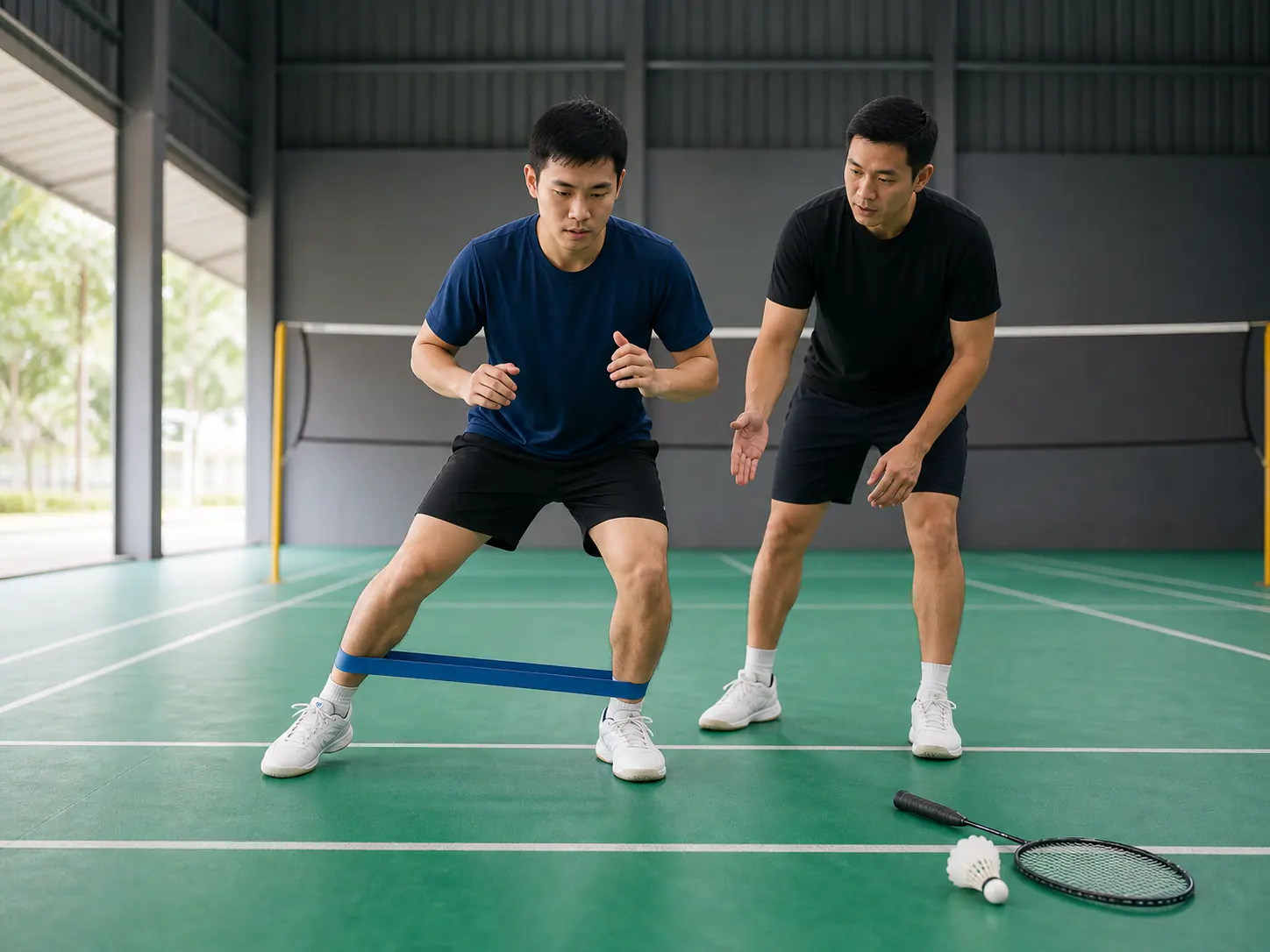
Badminton conditioning with a lateral resistance-band exercise

Plenty of athletes lift weights, but many do it like bodybuilders or powerlifters, chasing size or maximal numbers that do not transfer to their sport. Strength for athletes is a different job. It is about building power, the kind of strength you can express quickly, plus durability and the specific qualities your sport rewards, all programmed so it supports rather than sabotages your training and competition.

We build gym strength that plays. That means prioritising power and transferable strength over gym vanity, addressing the weak links that limit your sport, and scheduling the work so you are never too sore or fatigued for your key sessions. Whether you compete in a team sport, an endurance event or a racket sport, the right strength work makes you faster, more powerful and more durable where it counts.

Why athletes need different strength work

A bodybuilder trains for size and a powerlifter for maximal one-rep strength, but an athlete needs strength they can apply quickly and repeatedly in their sport. That means prioritising power, rate of force development, and strength through the ranges and movements their sport actually uses, rather than just heavier numbers on a few lifts.

It also has to fit into an already busy training schedule without leaving you flat for practice or competition. Programmed badly, gym work drains your sport; programmed well, it transforms it.

What we assess and build

  • Power and explosive strength that transfers to sport
  • Transferable strength through sport-specific movements
  • Weak-link work to remove what limits your performance
  • Smart programming around your training and competition

A sample strength approach

  1. Assess your sport, your weak links and your schedule
  2. Build a foundation of movement quality and base strength
  3. Develop power and transferable, sport-specific strength
  4. Periodise the work around your season and key events

Common mistakes and home alternatives

Athletes copy bodybuilding splits that build size but little transferable power, or lift so hard they sabotage their sport. At home, compound lifts, explosive movements, single-leg work and core training, programmed sensibly, build the transferable strength most sports actually need.

Frequently Asked Questions

Will lifting make me slow or bulky for my sport?+

Not when it is programmed for athletes. We build power and transferable strength, not size for its own sake. Done right, gym strength makes you faster and more powerful, not slower. The bulk fear comes from training like a bodybuilder, which we do not.

How is this different from a normal gym program?+

A typical program chases size or general fitness. We program specifically to transfer to your sport, prioritising power, sport-specific movements and your weak links, and scheduling it around your training so it helps rather than hinders.

How do I fit gym work around my sport?+

We periodise it around your training and competition, placing harder sessions away from key practices and games. That way the strength work supports your sport instead of leaving you flat when it matters.

When should I get an issue checked first?+

Any painful or unstable joint, or an unresolved injury, should be assessed by a physio or doctor before heavy lifting. We build strength around cleared, stable issues and refer when clinical input is needed.

Continue exploring

Programmes

Sports Performance Programme

A sports performance programme develops the speed, strength, power and resilience your sport demands, whether that is football, badminton, running or cycling. We build a targeted plan around your sport and position, so you perform better on the pitch, court or road and break down less often.

See what it includes →
Programmes

Strength for Men Over 40

Strength training for men over 40 rebuilds the muscle, energy and shape that slip away in your 40s and 50s, using a smart, joint-friendly approach that fits a busy life. It is not about training like you did at 25, but training better than you ever did.

See what it includes →
Goals

Recreational Sport Performance

Recreational sport performance training builds the strength, conditioning and resilience that make you better and more durable at the sport you love, futsal, badminton, tennis, running, hiking. We coach it 1-to-1 to complement your game, so you play harder and break down less.

See the coaching approach →
Goals

Sustainable Weight Loss

Sustainable weight loss means losing weight at a pace you can hold and keeping it off for years, not weeks. We skip crash diets and build habits, steady eating, regular strength work and daily movement, coached 1-to-1 so the plan survives real life, festivals and travel.

See the coaching approach →
Weight Loss

Weight-Loss Training for Women

Weight-loss training for women uses strength work to drop fat while keeping, not shrinking, the shape you want. It sidesteps the crash-diet cycle, respects your energy and cycle, and builds strength that carries into daily life. No bulking, no starving, a supportive setting.

See the coaching approach →
Weight Loss

Cardio for Fat Loss

Cardio helps fat loss by burning extra calories and improving fitness, but it is a supporting act, not the star. Diet and strength training do the heavy lifting; cardio tops up the burn. We help you use the right amount and type without overdoing it or letting it eat your recovery.

See the coaching approach →

Ready for a more structured way to train?

Start with an assessment so we understand your level, goal, schedule and preferred training location.

The request opens WhatsApp; a time is confirmed only after we reply and agree it with you.

Request an assessment time Ask a question first