Skip to content

Exercise technique guide

How to Do a Hamstring Curl

The hamstring curl bends the knee against resistance to isolate the hamstrings at the back of the thigh. It strengthens the muscles that protect your knees and balance out the quads. It can be done on a machine, with a band, or as a sliding bodyweight version.
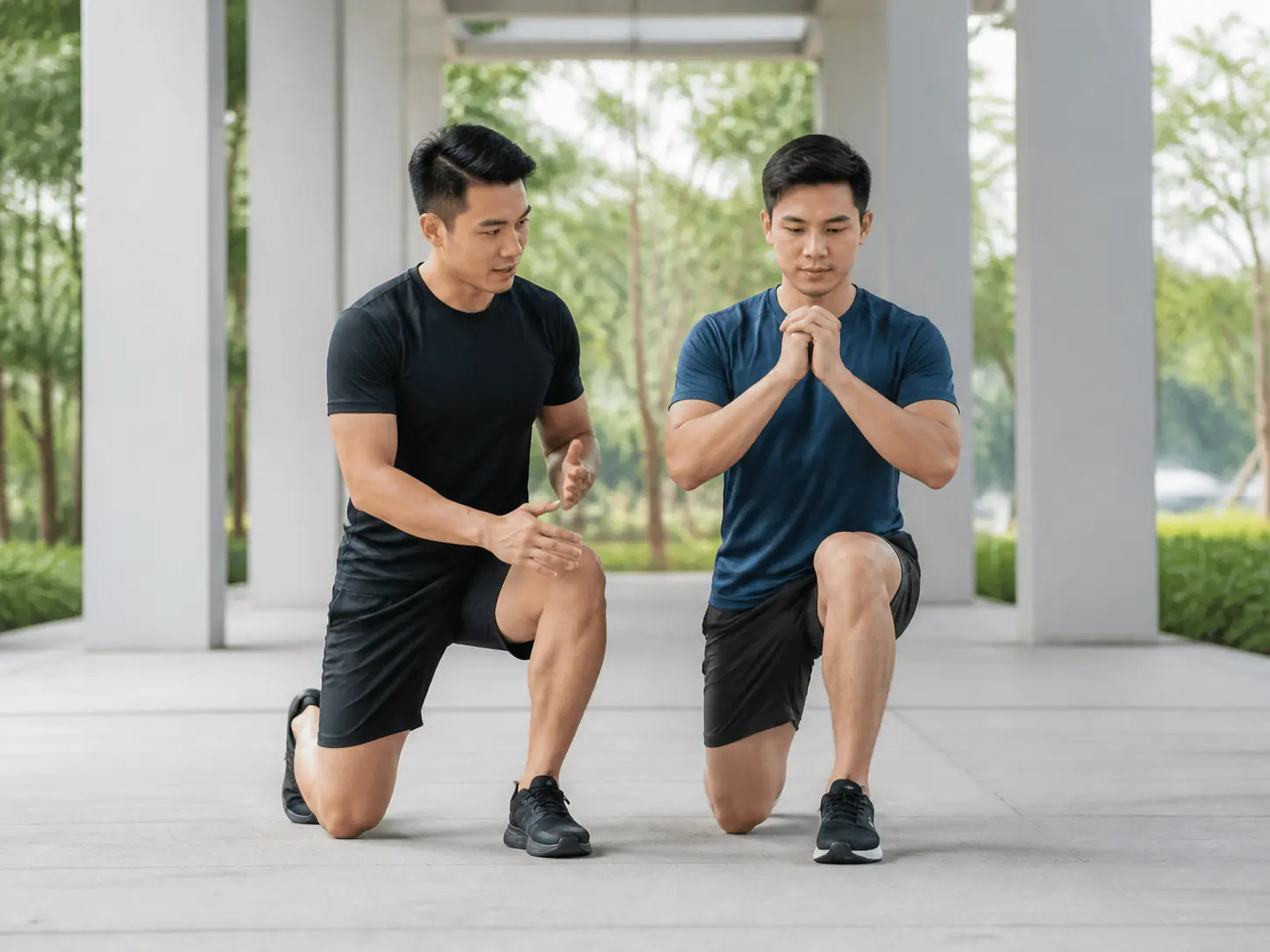
A trainer demonstrating controlled split-squat technique

Many people have quads that dominate hamstrings, and that imbalance can leave the knees less protected. The hamstring curl targets the back of the thigh directly, building strength that supports the knees and rounds out your leg training.

A machine, a band or even a sliding-floor version works, so it fits home or our Putra Heights centre. Alongside hip hinges and deadlifts, it helps build resilient hamstrings that protect your knees during running and sport.

What it trains and who it suits

It isolates the hamstrings, which flex the knee and help protect it. It suits runners, athletes, and anyone whose quads dominate, wanting more balanced, knee-protecting leg strength.

Because it targets one muscle group directly, it complements bigger lifts like deadlifts by adding focused hamstring work.

Step-by-step cues

  1. Set up on a machine, or anchor a band, or lie for sliders
  2. Position your legs so the resistance loads the hamstrings
  3. Curl your heels toward your backside with control
  4. Squeeze the hamstrings hard at the top
  5. Lower slowly, resisting all the way down

Common mistakes and quick fixes

  • Rushing the curl, control both the lift and the lowering
  • Using momentum, keep the movement smooth and deliberate
  • Arching the back on floor versions, brace the core and squeeze glutes
  • Half range, curl fully and lower fully each rep

Regressions, progressions and when to stop

Too hard? Use lighter resistance or a band. Too easy? Add load, slow the lowering, or try single-leg or slider curls. At home a band or sliding towel works; at our centre we use the machine and add eccentric focus.

  • Stop if you feel sharp knee or hamstring pain rather than muscle effort
  • See a professional if your hamstring cramps or pinches sharply

Frequently Asked Questions

Why train hamstring curls if I already deadlift?+

Deadlifts train the hamstrings as hip extensors; curls train them as knee flexors. Doing both develops the muscle more completely and better protects the knees.

Can I do hamstring curls at home?+

Yes. A resistance band around your ankle, or lying on your back and dragging your heels in on sliding towels, both target the hamstrings without a machine.

Why are hamstrings important for the knees?+

Strong hamstrings balance the pull of the quads and help stabilise the knee, which can reduce injury risk in running and sport when trained alongside the rest of the leg.

How many reps should I do?+

Two or three sets of ten to fifteen controlled reps works well, with a good squeeze at the top and a slow lowering to build strength.

Continue exploring

Programmes

Balance Training

Balance training strengthens the muscles, reflexes and coordination that keep you steady, on stairs, wet bathroom tiles, uneven pavements. Whether you feel a bit unsteady or just want to move with confidence, we build your stability step by step in a safe, supported setting.

See what it includes →
Programmes

Core Training

Core training builds the deep trunk muscles that stabilise your spine, protect your back and transfer force between your upper and lower body. It is about a strong, functional midsection that supports everything you do, not just chasing visible abs with endless crunches.

See what it includes →
Weight Loss

How Fast Can You Lose Fat Safely

A safe, sustainable fat-loss rate is roughly 0.5 to 1 percent of your bodyweight a week. Faster than that usually costs you muscle, energy and the ability to keep it off. Heavier people can lose faster at first; leaner people should go slower. Patience protects your results.

See the coaching approach →
Goals

Core Strength and Flat Stomach

A strong core and a flat stomach are two separate jobs. Core strength comes from training the muscles that stabilise your spine; a flatter stomach comes from losing belly fat. We coach both together 1-to-1, so you get a back-protecting core and a tighter midsection.

See the coaching approach →
Goals

Do Your First Pull-Up

Getting your first pull-up is a specific strength goal with a clear path: build your back and arm pulling strength through progressions like assisted and negative reps until you can lift your full bodyweight once. We coach that ladder 1-to-1 so you actually get there.

See the coaching approach →
Assessments

Push-Up Test

A push-up test counts how many good-form push-ups you can do in a row to gauge upper-body strength and endurance. We scale it, wall, incline, knees or full, to your level. It is a fitness marker we improve over time, done with quality reps, not a max-out competition or a medical test.

See how it works →

Want help applying this guide to your own training?

Private coaching adapts exercise choice, loading and progression to your level, equipment and goal.

Ask a question first Request an assessment time