Skip to content

Exercise technique guide

How to Do a Lateral Raise

The lateral raise has you lift dumbbells out to the sides to shoulder height. It isolates the side of the shoulder, building width and healthy overhead function. It uses light weight and strict control, making it a simple, joint-friendly move for any level.
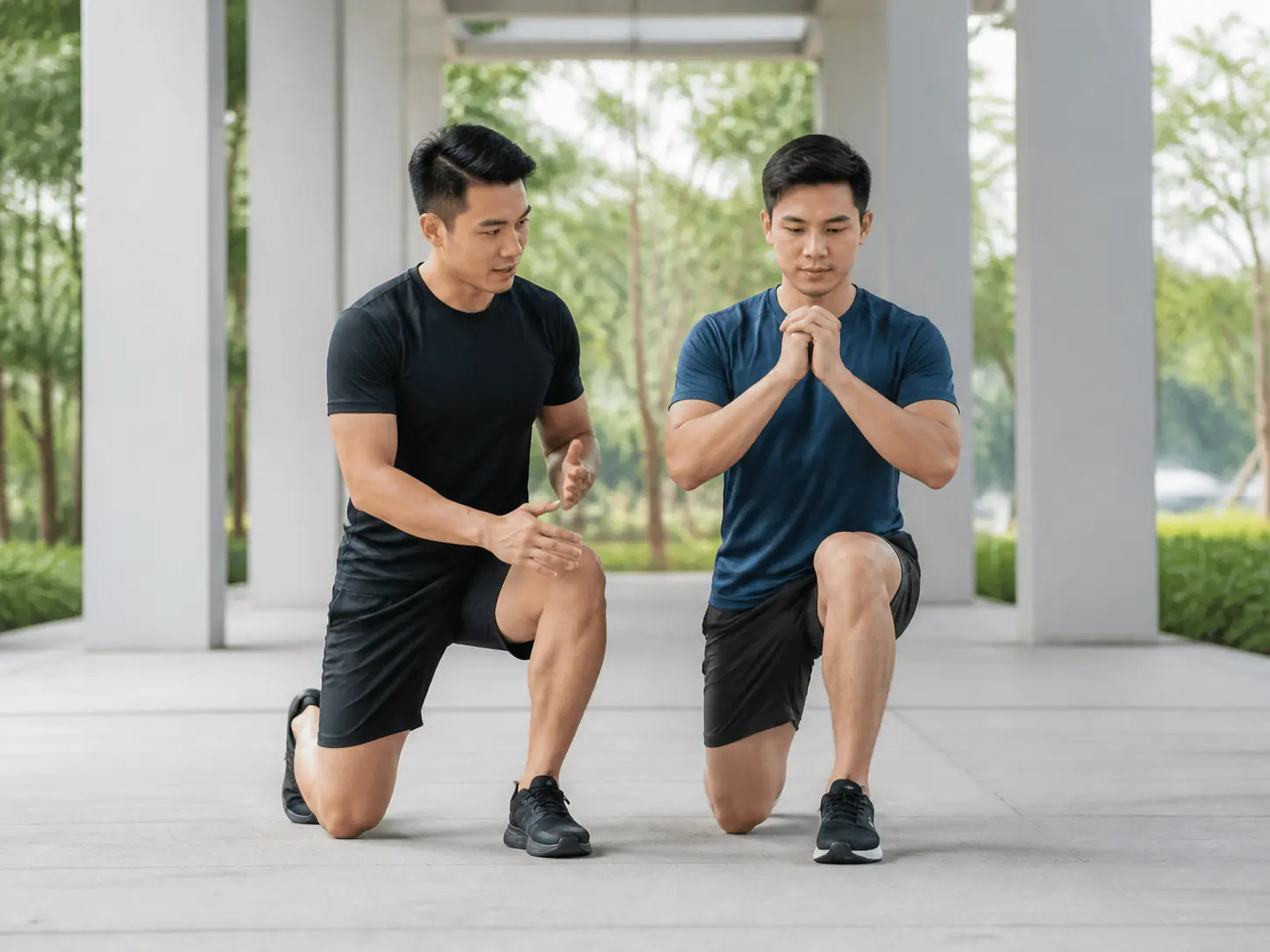
A trainer demonstrating controlled split-squat technique

The lateral raise is a small move with a big payoff for how your shoulders look and function. Lifting the arms out to the side targets the side deltoid, the muscle that gives shoulders width and helps you reach out and up.

You only need a pair of light dumbbells, so it fits any home or our Putra Heights centre. The catch is that ego ruins it: too heavy and you swing. Light weight with strict form is what actually works.

What it trains and who it suits

It isolates the side of the shoulder, with a little help from the upper traps. It suits anyone building shoulder shape or wanting healthier, stronger reaching movements.

Because it uses light loads and no spine loading, it is gentle and easy to fit in for almost everyone, including beginners.

Step-by-step cues

  1. Stand tall with a light dumbbell in each hand
  2. Keep a slight bend in the elbows throughout
  3. Raise the weights out to the sides, leading with the elbows
  4. Stop at about shoulder height, no higher
  5. Lower slowly under control and repeat

Common mistakes and quick fixes

  • Swinging the weights up, go lighter and move slowly
  • Shrugging the shoulders, keep them down away from the ears
  • Raising above shoulder height, stop level with the shoulders
  • Leading with the hands, lead with the elbows instead

Regressions, progressions and when to stop

Too hard? Use lighter weights or raise one arm at a time. Too easy? Add a pause at the top, slow the lowering, or increase reps. At home water bottles can work; at our centre we fine-tune the weight to keep form strict.

  • Stop if you feel sharp shoulder pain rather than a muscle burn
  • See a professional if the shoulder pinches at the top of the raise

Frequently Asked Questions

Why are my lateral raises so hard with light weight?+

The side shoulder is small and works at a long lever, so even light dumbbells feel heavy when done strictly. That is normal and a sign you are targeting the right muscle.

How high should I lift?+

To about shoulder height, where your arms are parallel to the floor. Going higher shifts work to the traps and can irritate the shoulder, so stop level.

Should I feel it in my traps?+

A little is fine, but the main burn should be on the side of the shoulder. If your traps take over, lower the weight and keep your shoulders down.

How often can I train lateral raises?+

They recover quickly, so two or three times a week is fine. Because the loads are light, you can include them often without much soreness.

Continue exploring

Programmes

Beginner Training

Beginner training is for people starting from zero, no gym background, no idea where to begin. We keep the first weeks simple, teach you the basic movements, and build the habit before adding intensity. No crowds, no jargon, no being left to figure it out alone.

See what it includes →
Programmes

Resistance-Band Training

Resistance-band training uses elastic bands to build strength and muscle with almost no equipment or space. Bands are portable, joint-friendly and surprisingly effective, making them ideal for home and condo training, travel, and anyone who wants results without a rack of weights.

See what it includes →
Personal Training

Your First Session

Your first session is an assessment plus a gentle introductory workout, not a fitness test you can fail. We take your history and goals, check how you move, and coach a light first workout so you leave knowing what to expect and how to prepare for the next one.

Compare this option →
Health & Exercise

Low-Impact Options for Sensitive Joints

If your joints are sensitive and your doctor has cleared you, low-impact training builds strength and fitness without the jarring that aggravates sore knees, hips or backs. We coach controlled, joint-friendly options and adjust to how you feel. This is general fitness coaching, not treatment for a joint problem.

Read the suitability guide →
Why KinesioFitness

Assessment-Led Coaching

Assessment-led coaching means we test before we prescribe. Before your first real workout we screen how you move, what you can lift, your history and your schedule, then build a plan on facts, not a template. It is the single biggest reason our clients progress safely.

Compare this option →
Goals

Improve Balance

Improving balance means training the strength, ankle control and quick reactions that keep you steady on your feet. We coach it progressively 1-to-1 so stairs, uneven pavements, wet floors and one-legged moments stop feeling risky, a foundation for confidence at any age.

See the coaching approach →

Want help applying this guide to your own training?

Private coaching adapts exercise choice, loading and progression to your level, equipment and goal.

Ask a question first Request an assessment time